
Resin bound driveways in Northamptonshire
Looking for an attractive, durable and low-maintenance driveway? A professionally installed resin bound driveway provides a seamless decorative surface that can transform the entrance to your property. Combining natural aggregates with a specialist resin, this popular surfacing option offers a contemporary appearance, a choice of colours and textures, and a permeable finish that allows rainwater to drain through the surface when installed as part of a suitable system.
At Liberty Driveways, we install resin bound driveways in Northamptonshire and the surrounding counties, helping homeowners create practical outdoor spaces that complement their properties. Whether you want a modern grey driveway, a traditional natural stone appearance or a bespoke design with contrasting borders, we can help you choose a finish that suits your home, available space and budget.
Our approach covers the complete resin bound driveway installation process, from the initial site survey and assessment of the existing ground to preparation of the base, mixing the materials and carefully laying the finished surface. Getting these stages right is essential to achieving a consistent, hard-wearing driveway that looks good for years to come.
As experienced resin bound driveway contractors, we provide advice on aggregate colours, surface design, drainage and installation requirements before work begins. Contact Liberty Driveways to discuss your project and arrange a free, no-obligation quotation.
What is a resin bound driveway?
Resin bound surfacing is made by mixing selected decorative aggregates with a clear resin binder before spreading and smoothing the mixture over a suitably prepared base. The resin coats and binds the individual stones together, creating a firm, continuous surface with small interconnected voids between the aggregates.
Unlike loose gravel, the stones are held in place, helping to prevent them from scattering across the pavement or being carried into the house. The smooth, textured finish is comfortable to walk on and provides a practical alternative to conventional gravel, block paving and other driveway materials.
Resin bound surfacing is suitable for a variety of outdoor applications, including:
- Driveways and parking areas.
- Front garden entrances and paths.
- Garden walkways and connecting paths.
- Patios and outdoor seating areas.
- Swimming pool surrounds.
- Steps and other suitably designed external features.
Each application requires appropriate consideration of the underlying structure, intended use, drainage and finish. A driveway carrying regular vehicle traffic has different requirements from a garden path, so the installation system must be selected accordingly.


Resin bound vs resin bonded
Although the names sound similar, resin bound and resin bonded surfacing are different installation methods. With resin bound paving, the aggregate is mixed with resin before being laid, producing a consistent, permeable surface. With resin bonded surfacing, resin is applied to the base first and loose aggregate is scattered over it.
Resin bound paving is generally the preferred option when a seamless decorative finish and surface permeability are important. Resin bonded finishes have a different texture and drainage behaviour because the aggregate is not mixed throughout the resin. Choosing the right system depends on the appearance you want, the existing base and the intended use of the area.
Read our planned guide to resin bound vs resin bonded surfacing for a more detailed comparison.
“Combining natural aggregates with a specialist resin, this popular surfacing option offers a contemporary appearance, a choice of colours and textures, and a permeable finish that allows rainwater to drain through the surface when installed as part of a suitable system”
Benefits of resin bound driveways
A resin bound driveway combines decorative flexibility with practical everyday performance. When correctly designed and installed using suitable materials, it can provide a durable entrance that requires relatively little routine maintenance.
- Permeable construction: water can pass through the interconnected voids in the aggregate, provided the complete surface and underlying construction are designed to allow drainage.
- Attractive appearance: a broad selection of aggregate colours and blends makes it possible to complement both traditional and contemporary properties.
- Seamless finish: the surface can be laid across broad areas without the regular joints associated with block paving or paving slabs.
- Stable aggregate: the stones are bound together rather than left loose, helping to create a more consistent surface.
- Low maintenance: routine sweeping and occasional washing help keep the driveway looking presentable.
- Versatile design: contrasting colours, decorative borders and different aggregate blends can be incorporated into a tailored layout.
- Suitable for different outdoor spaces: the same general surfacing approach can be adapted for driveways, paths, patios and other suitably constructed areas.
As with any driveway material, the long-term performance depends on the quality of the installation, the condition of the base, drainage, the selected resin system and how the surface is used. A well-chosen design and properly prepared foundation are therefore just as important as the final appearance.
For a balanced overview, see our planned articles on whether resin driveways are a good choice and the pros and cons of resin driveways.
“The stunning alternative to decking, slabs or traditional gravel”
Permeability and drainage
One of the main attractions of resin bound driveways is their potential to provide a permeable surface. Unlike many conventional impermeable finishes, a correctly constructed resin bound system contains interconnected spaces between the aggregate that allow rainwater to drain through the paving.
This can help reduce surface water accumulation and puddling, provided the base and ground beneath it can accommodate the water. Permeability is not determined by the decorative layer alone. The complete construction, including the sub-base, ground conditions and any drainage provisions, must be considered.

How does a permeable resin driveway work?
- Rainfall reaches the surface: water passes into the small voids between the bound aggregate.
- Water moves through the construction: the permeability of the surface and the layers below determines how effectively water can drain.
- The ground or drainage system receives the water: suitable ground conditions may allow infiltration, while other sites may require an engineered drainage solution.
Correct installation helps preserve the drainage characteristics of the system. Excess resin, unsuitable aggregate grading, contamination or an inappropriate base can compromise permeability. We therefore consider drainage requirements when assessing the proposed driveway rather than treating the surface material as a complete drainage solution on its own.
SuDS and resin bound driveways
SuDS are designed to manage rainwater in a more sustainable way, helping to control runoff and reduce pressure on conventional drainage infrastructure. Permeable paving can form part of a suitable drainage strategy by allowing water to pass through the surface and into an appropriately designed underlying construction.
A resin bound driveway may be suitable for a SuDS approach, but compliance depends on the entire installation, site conditions and applicable requirements. The presence of a permeable resin surface does not automatically mean that every driveway complies with all drainage rules.
Factors to consider include:
- The permeability and condition of the existing ground.
- The design and depth of the sub-base.
- The expected volume of rainfall and surface water.
- The relationship between the driveway and neighbouring properties.
- Any applicable planning, drainage or building requirements.
Where drainage is a key consideration, the proposed construction should be assessed before installation. Our team can discuss the practical options for your driveway and identify when further drainage advice may be required.
Resin bound driveway colours and design ideas
One of the biggest advantages of resin bound paving is the range of decorative finishes available. Different natural aggregates can be blended to create subtle, understated colours or more distinctive patterns. The finished driveway can be designed to complement the brickwork, roof tiles, windows and other features of your property.
Choosing aggregate colours
Resin bound driveway colours range from pale stone and warm golden blends to darker greys and contemporary charcoal finishes. The right choice depends on the style of your home, the surrounding landscape and how you want the entrance to look.
- Grey resin bound driveways: a versatile option for contemporary homes, modern extensions and properties with neutral exterior finishes.
- Natural stone blends: a softer, more traditional appearance that can complement brickwork and established gardens.
- Golden and buff aggregates: warmer tones that work well with traditional properties and natural landscaping.
- Dark aggregate blends: a bold, modern finish that can create a strong contrast with lighter walls and edging.
- Mixed-colour aggregates: combinations of different stone colours can add depth and create a distinctive overall appearance.
Colours can look different depending on the light, weather and surrounding materials. We recommend considering actual aggregate samples before making a final decision, particularly when matching a new driveway to existing paving or architectural features.
Resin driveway borders and contrasting details
A resin bound driveway does not have to be one uninterrupted colour. A contrasting border can define the edges, frame the entrance or create a clear division between parking areas and pedestrian routes.
Design options can include:
- A darker border around a lighter central surface.
- A contrasting entrance apron to create a welcoming first impression.
- Separate colour zones for parking and access routes.
- Curved edges that follow the shape of a front garden.
- Coordinated resin bound paths leading to the front door.
- Matching or complementary finishes for patios and other external areas.
Good design is about more than colour. The layout should also work with the property’s access, turning requirements, parking arrangements and existing levels. A well-planned resin driveway design brings these practical details together with the decorative finish.
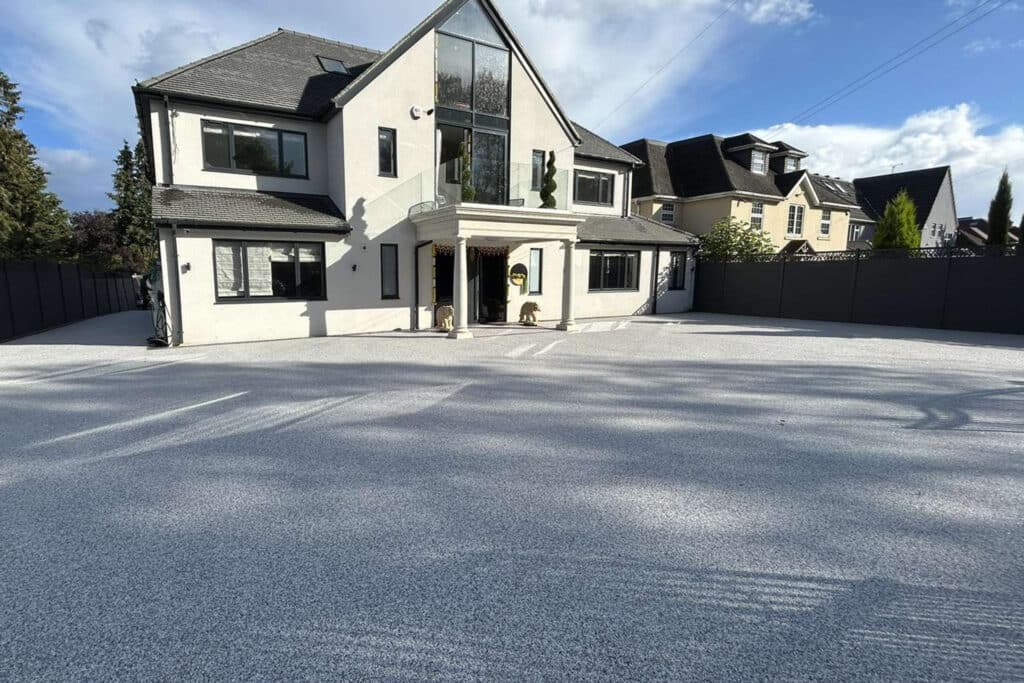
“Resin bound driveway colours range from pale stone and warm golden blends to darker greys and contemporary charcoal finishes. The right choice depends on the style of your home, the surrounding landscape and how you want the entrance to look”
The resin bound driveway installation process
A successful resin bound driveway starts with thorough planning and preparation. Although the finished surface is relatively thin compared with the supporting construction, the base beneath it must be suitable for the expected loading and drainage requirements.
Every project is different. The amount of excavation, the condition of the existing driveway, the area to be covered and the complexity of the design all influence the work involved. Our installation process is tailored to the individual site.
1. Site survey and quotation
We begin by discussing your requirements and assessing the proposed driveway area. This helps us establish the scale of the project, identify potential complications and recommend an appropriate installation approach.
The initial assessment considers:
- The size and shape of the driveway.
- The condition and type of the existing surface.
- Vehicle access and the expected use of the area.
- Levels, falls and drainage arrangements.
- Edging, borders and connections to paths or entrances.
- Your preferred aggregate colours and overall design.
Following the assessment, we can provide a quotation based on the agreed scope of work and the construction required.
2. Removing the existing driveway where necessary
If the existing surface is unsuitable, it may need to be removed before the new driveway can be constructed. The extent of the work depends on whether the site has old concrete, damaged tarmac, loose gravel, block paving or an existing base that can be retained.
Removal may involve excavation, clearing away unsuitable materials and preparing the area to the required levels. Where an existing surface is being considered as a base, its condition and suitability must be assessed rather than assuming that a new resin finish can simply be applied over it.
This stage also provides an opportunity to address underlying problems that could affect the new driveway, such as poor levels, inadequate drainage or an unstable foundation.
3. Preparing the sub-base
The supporting construction is fundamental to the performance of the finished driveway. A base that moves, settles or cannot accommodate the expected traffic can lead to damage in the surface above it.
Depending on the site, preparation may include:
- Excavating to the required depth.
- Removing unsuitable or unstable material.
- Installing an appropriate sub-base.
- Compacting the supporting layers.
- Establishing suitable levels and falls.
- Providing drainage provisions where required.
The correct construction depends on the ground conditions, intended loading and selected surfacing system. The base must be suitable for its purpose before the resin bound aggregate is laid.
4. Installing the edging and defining the layout
Edging helps contain the resin bound material and creates a neat transition between the driveway and adjacent surfaces. Depending on the design, this may involve existing kerbs, new edging or other suitable restraints.
Where the driveway includes contrasting borders or several colour sections, the layout is planned before installation begins. Clear definition of the different areas helps the installers achieve the intended design and a tidy finish.
5. Checking the base and preparing the working area
Before mixing the resin and aggregate, the prepared base is checked for suitability, cleanliness and readiness. The surface must be appropriate for the selected system, and any required primer or preparation treatment must be completed in accordance with the relevant installation specification.
Weather conditions are also important. Rain, moisture, unsuitable temperatures and other environmental factors can affect installation and curing. The working area must be protected from conditions that could compromise the finished surface.
6. Mixing the resin and aggregate
The decorative aggregate and resin binder must be combined thoroughly to produce a consistent mixture. Correct mixing is essential because the resin needs to coat the stones evenly throughout each batch.
At Liberty Driveways, forced action mixers are an important part of the installation process. These specialised construction machines use a stationary drum with rotating internal paddles to actively fold, shear and blend materials. Unlike standard drum cement mixers, which rely mainly on the tumbling action of the drum, forced action mixers provide the intensive mixing needed for consistent, high-quality blends.
This equipment is particularly useful for materials that require thorough and uniform mixing, including resin bound aggregate, specialised screeds and epoxy repair mortars.
Equipment used for resin bound installation
Professional installation involves more than spreading the material across the driveway. The equipment and tools must be suitable for preparing the base, mixing the aggregate and achieving the specified finish.
- Forced action mixers: thoroughly blend the aggregate and resin to help produce a consistent mixture.
- Surface preparation equipment: helps prepare the existing base or newly constructed supporting layers as required.
- Measuring and mixing equipment: supports accurate batching in accordance with the resin system’s instructions.
- Hand tools and trowels: allow the installers to spread, level and finish the mixture.
- Edging and setting-out equipment: helps maintain the intended boundaries, borders and design details.
- Personal protective equipment: supports safe working practices during preparation and installation.
Using appropriate equipment and following the manufacturer’s installation instructions helps achieve a consistent finish and reduces the risk of avoidable defects.
7. Laying and finishing the resin bound surface
Once mixed, the resin bound aggregate is transferred to the prepared area and spread by hand. The installers work the material into position, maintaining the required depth and carefully finishing the surface with suitable trowels.
This stage requires skill and organisation. The mixture must be placed and finished within its working time, with particular care taken to maintain consistency across the driveway and avoid visible differences between batches.
Where borders or multiple colours are included, the installation must follow the planned layout. Edges, transitions and changes in direction are finished carefully to achieve a clean, professional appearance.
8. Curing and final inspection
After laying, the resin bound surface needs time to cure and develop its intended performance. During this period, the driveway must remain protected from traffic, rain and other conditions that could damage the finish.
The curing time varies according to the resin system, temperature, weather and site conditions. The driveway should not be used until the installers have confirmed that it is ready for the intended traffic.
Once the surface has cured sufficiently, the completed area can be inspected for consistency, neat edges and overall finish. We can also explain the appropriate aftercare and cleaning requirements for your new driveway.
How long does a resin bound driveway take to install?
The installation timescale depends on the size of the driveway and the amount of preparation required. A straightforward project with a suitable existing base will generally involve less work than a complete replacement requiring excavation, a new sub-base and additional drainage or edging.
As a guide, the work can be divided into the following stages:
- Survey and planning: the time required to assess the site, agree the design and arrange materials.
- Excavation and base construction: potentially the most time-consuming part of the project if the existing driveway needs to be removed and rebuilt.
- Resin bound installation: the mixing, laying and finishing work, which depends on the area and design complexity.
- Curing: the period needed before the driveway can be used safely.
A relatively straightforward driveway may be installed over a short period, while a larger or more complex project can take several days or longer when extensive groundwork is required. Curing is a separate consideration, so completion of the laying work does not necessarily mean that the driveway is immediately ready for vehicles.
We can provide a more realistic timescale after assessing the size, access, ground conditions and scope of the proposed work. For further guidance, see our planned article on how long a resin driveway takes to dry.
Can you install a resin driveway over concrete?
An existing concrete driveway may provide a suitable base for resin bound surfacing, but this depends on its condition, stability, levels and drainage. A sound, appropriately constructed base may be retained, whereas cracked, moving or deteriorating concrete may require repairs or replacement.
Before recommending an overlay, the existing surface must be assessed for defects, movement, contamination and other issues that could affect the new finish. The installation also needs to account for the correct levels, edging and drainage arrangements.
Simply covering an unsuitable base will not resolve underlying structural problems. Any cracks or movement that remain active may affect the new surface, so the correct preparation and construction approach must be established before work begins.
Read our planned guide to laying a resin driveway on concrete for more information about existing bases and preparation.
Resin bound driveway maintenance and cleaning
One of the attractions of resin bound paving is that it does not require the same routine joint maintenance as many traditional paving systems. However, low maintenance does not mean maintenance-free. Regular care helps preserve the appearance of the aggregate and prevents dirt, leaves and other debris from accumulating.
How to clean a resin bound driveway
- Sweep regularly: remove leaves, loose dirt and debris using a suitable outdoor brush.
- Wash when necessary: use water and an appropriate cleaning method to remove ordinary surface dirt.
- Deal with spills promptly: clean oil, fuel and other potentially staining substances using products suitable for the installed resin system.
- Remove weeds and moss: keep the surface clear of organic debris and address unwanted growth with methods suitable for the material.
- Avoid unsuitable chemicals: strong solvents or aggressive cleaning products may damage the resin binder or alter the finish.
- Follow the installation guidance: use the recommended cleaning methods and observe any restrictions on pressure washing or cleaning equipment.
Although the bound aggregate helps prevent stones from moving around like loose gravel, organic matter and dirt can still collect on the surface. Regular cleaning helps maintain the appearance and drainage characteristics of the driveway.
For more detailed advice, see our planned article on how to clean a resin drive.
How long does a resin bound driveway last?
The service life of a resin bound driveway depends on the quality of the materials, the preparation of the base, the installation method, drainage and the amount of traffic it receives. A correctly specified and professionally installed surface can provide years of use, but no particular lifespan can be guaranteed for every site.
Heavy or unsuitable loading, movement in the underlying construction, poor drainage, installation defects and inappropriate cleaning methods can all affect long-term performance. Selecting suitable materials and ensuring the supporting structure is correctly prepared are important steps towards achieving a durable result.
Routine maintenance also helps protect the appearance of the surface. Keeping it clean and dealing with spills promptly reduces the likelihood of staining and the accumulation of debris.
Our planned guide to how long a resin driveway lasts will explore the factors that influence durability and ongoing maintenance.
Resin driveway costs and value
The cost of a resin bound driveway depends on more than the area to be covered. The amount of groundwork, the condition of the existing surface, the chosen aggregate, the complexity of the design and the drainage requirements can all influence the quotation.
Important cost considerations include:
- Driveway size: the overall area and shape influence material quantities and installation time.
- Excavation and disposal: removing an old driveway and disposing of unsuitable material can add to the project cost.
- Sub-base requirements: a new or upgraded supporting structure may be necessary.
- Aggregate selection: different decorative blends and material specifications can affect the price.
- Decorative details: borders, multiple colours and intricate layouts can require additional setting-out and installation time.
- Drainage and edging: any additional construction needed to achieve suitable levels and manage water must be allowed for.
- Site access: restricted access or difficult working conditions may affect the installation process.
For these reasons, a single price per square metre cannot accurately represent every resin bound driveway project. The most useful quotation is based on the actual site conditions and the construction required to deliver the intended finish.
When comparing quotations, check that the proposed work covers the necessary preparation, base construction, surfacing materials, edging and any drainage requirements. A lower initial price may not represent the best value if essential groundwork has been omitted.
If you are comparing different driveway materials, our planned articles on resin driveway costs vs block paving and resin driveway vs tarmac costs will help explain the factors to consider.
Are resin bound driveways slippery?
Resin bound surfacing has a textured aggregate finish, but its slip resistance depends on the stone grading, resin system, surface texture and conditions in which it is used. Rain, frost, algae and accumulated organic matter can affect traction, as they can with many other external paving materials.
Choosing a suitable aggregate blend and maintaining the surface are important considerations. The installation should be specified for its intended use, with particular care where the driveway meets steps, sloping access routes or pedestrian entrances.
No external surface should be assumed to be slip-proof in every weather condition. If slip resistance is a particular concern, discuss the intended use and the appropriate specification with your installer.
Our planned guide, are resin driveways slippery?, will explore the subject in more detail.
Resin bound driveways compared with other surfaces
Choosing a driveway material involves balancing appearance, maintenance, installation requirements, drainage and cost. Resin bound surfacing is one option among several, and the most suitable choice depends on the property and how the driveway will be used.
Resin bound vs block paving
Block paving offers individual blocks that can be arranged in different patterns and replaced separately when necessary. Resin bound paving creates a more continuous finish, with decorative aggregate providing the colour and texture. The two options have different maintenance requirements and installation methods.
Resin bound vs tarmac
Tarmac is a practical, hard-wearing option for many driveways, particularly where a straightforward, relatively uniform finish is preferred. Resin bound surfacing offers a wider choice of decorative aggregate blends and can provide a permeable construction when appropriately designed. The overall cost comparison depends on the area, groundwork, specification and chosen finish.
Resin bound vs loose gravel
Loose gravel can offer a traditional appearance and may be relatively simple to install in suitable locations, but individual stones can move underfoot and under vehicle tyres. Resin bound aggregate is held together by the binder, providing a more stable, continuous surface.
There is no single best driveway material for every property. Consider the appearance you want, the condition of the ground, how much maintenance you are prepared to undertake and the practical requirements of your site before making a decision.
Other resin bound services
Resin bound surfacing is not limited to driveways. The same general principle of combining decorative aggregates with resin can be used to create coordinated outdoor areas, subject to the requirements of each application.
- Resin bound pathways: create defined routes through front gardens, rear gardens and other outdoor spaces with a consistent, decorative finish.
- Resin bound pool surrounds: extend the appearance of your outdoor space around a swimming pool, with the specification selected for the conditions and intended use.
- Resin bound steps: coordinate external steps with adjoining pathways and driveways, subject to suitable detailing and slip-resistance requirements.
- Resin bound patios: create a decorative outdoor area for seating, dining and entertaining.
Using complementary aggregate colours across different areas can help create a coordinated appearance throughout the front garden and other outdoor spaces. The design and construction of each surface should still be appropriate for its individual purpose.
Resin bound driveway contractors in Northamptonshire
Liberty Driveways installs resin bound driveways across Northamptonshire and the surrounding counties. Whether you are replacing an existing driveway or planning a new entrance, we can discuss the options and provide a quotation based on your property, preferred finish and installation requirements.
We work across a wide area, including Northampton, Wellingborough, Kettering and Rushden. We also undertake driveway projects in Corby, Oundle, Milton Keynes and Bedford.
Our wider service area includes Huntingdon, Leicester, Peterborough and Rugby. If you are searching online for resin bound driveway contractors near you, contact our team to discuss your location and project.
Resin bound driveway contractors in Northampton
If you are planning a new driveway in Northampton, we can help you explore suitable aggregate colours, borders, layout options and construction requirements. We assess the existing ground and access before recommending an installation approach that suits the property.
Resin bound driveway contractors in Wellingborough
For homeowners in Wellingborough and the surrounding villages, resin bound paving can provide a decorative alternative to traditional driveway materials. We can discuss the condition of your existing driveway, the required preparation and the finish you would like to achieve.
Resin bound driveway contractors in Kettering
Whether your property in Kettering has a small front drive or a larger parking area, we can advise on the practical and decorative options available. The design can incorporate a choice of aggregate blends and, where appropriate, contrasting borders.
Resin bound driveway contractors in Rushden
We also work with homeowners in Rushden who want to improve their driveway with a clean, continuous decorative surface. The suitability of the existing base, drainage requirements and intended vehicle use will all be considered when planning the installation.
Get a quotation for your resin bound driveway
A new resin bound driveway can transform the appearance of your property while providing a practical surface for everyday access and parking. The key is to choose the right materials and design, prepare the underlying construction properly and allow the surface to cure before use.
At Liberty Driveways, we are happy to discuss your ideas, explain the installation process and help you understand the work involved. Whether you are considering a complete driveway replacement, a new entrance or a coordinated combination of driveways and pathways, we can help you plan the next steps.
Call Liberty Driveways on 01933 716018 to discuss your project and arrange a free, no-obligation quotation.
“The stunning alternative to decking, slabs or traditional gravel”
Other resin bound Services
Transform your home's outside area with a resin bound surface

Pathways

Swimming pools


