
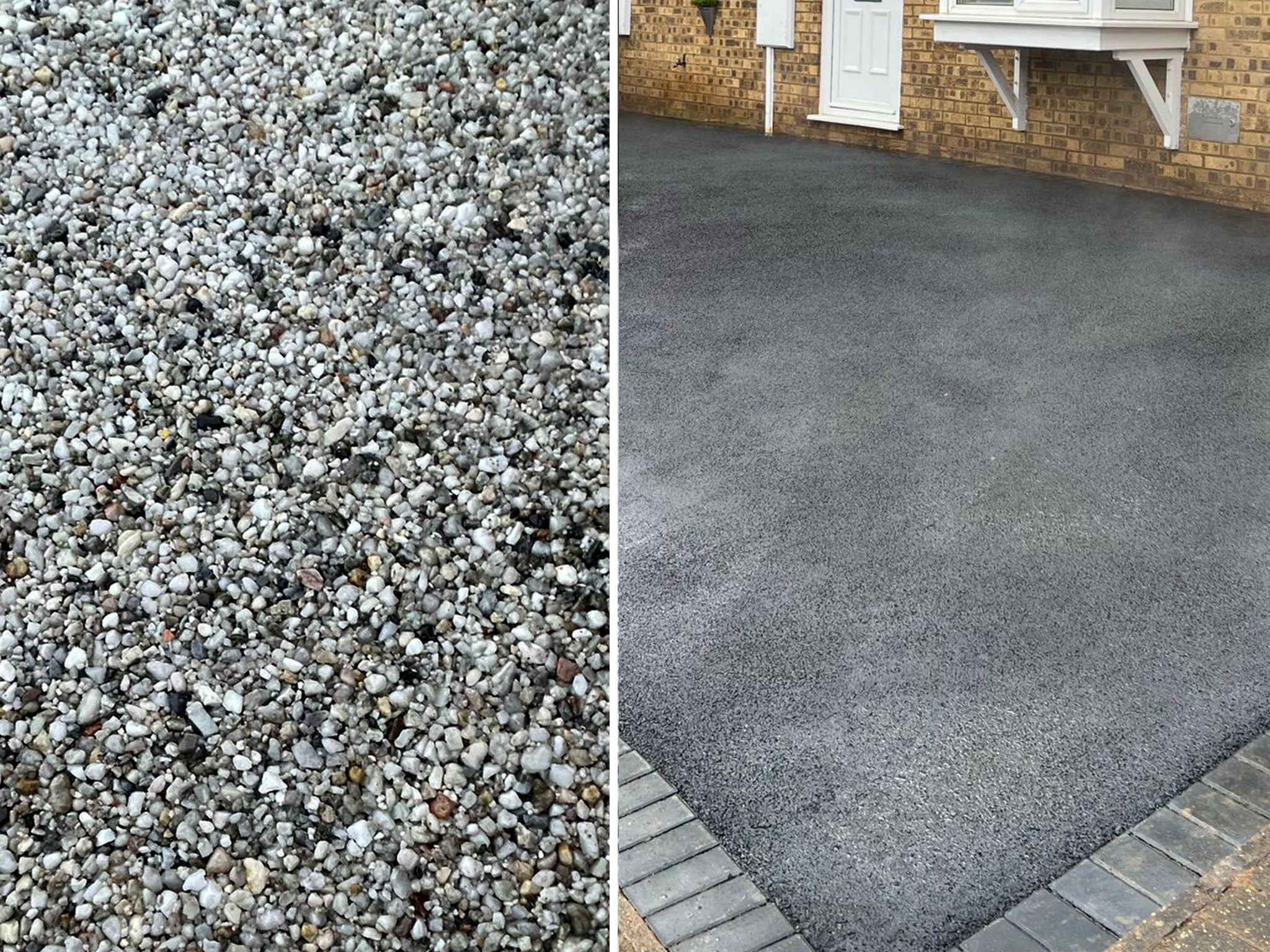
Choosing between a resin bound driveway and tarmac often comes down to the initial cost, long-term maintenance and the finish you want for your property. Tarmac is generally cheaper to install, while a resin bound driveway typically costs more because of the materials, specialist installation and wider choice of colours and finishes.
The total cost of either surface depends on the driveway’s size, the condition of the existing base, the amount of preparation required and access to the site. Although tarmac can offer a lower initial outlay, resin bound surfacing may be worth the extra investment if you want a decorative, low-maintenance driveway with a permeable finish, subject to suitable installation and drainage design.
In this guide, we compare resin bound driveway costs with tarmac, explain the main factors affecting your budget and explore the practical differences to consider before choosing a surface.
Resin driveway vs tarmac: upfront cost comparison
Resin bound driveways generally cost more to install than tarmac, although the final price depends on the size of the driveway and the work required. The table below provides indicative costs for comparing the two surfaces.
| Driveway type | Indicative installed cost per square metre | Typical cost for a 50 m² driveway |
|---|---|---|
| Resin bound | £50–£100 | £2,500–£5,000 |
| Tarmac | £40–£70 | £2,000–£3,500 |
These figures are approximate guides rather than fixed prices. They may not include extensive excavation, a new sub-base, drainage improvements or the removal of an existing driveway. Always compare like-for-like quotes to understand the full installation cost.
Although tarmac can be cheaper upfront, resin bound surfacing offers a wider choice of decorative finishes and can provide a permeable surface when installed over a suitably designed base. The best option depends on your budget, the condition of your driveway and the finish you want.
Choosing between a resin bound driveway and tarmac often comes down to the initial cost, long-term maintenance and the finish you want for your property. Tarmac is generally cheaper to install, while a resin bound driveway typically costs more because of the materials, specialist installation and wider choice of colours and finishes
What affects the cost of a resin driveway or tarmac?
Both surfaces require a suitable foundation, but the materials and installation methods differ. The final quote will depend on several factors:
- Driveway size: larger areas generally cost more overall, although the price per square metre may vary.
- Ground preparation: removing an existing surface, repairing the base, addressing cracks or dealing with drainage issues can add to the cost.
- Base construction: a sound, suitable base may be reusable, while a damaged or unsuitable base could require repairs or replacement.
- Materials and finish: resin bound driveways offer a choice of aggregate colours and blends, while tarmac typically provides a more uniform finish.
- Site access: restricted access, awkward layouts and additional labour can affect installation costs.
For a fair comparison, ask contractors to quote for the same area and specify preparation, base work, edging, drainage and waste removal. A cheaper headline price may not include everything needed for a durable finish.
Resin bound driveway cost vs tarmac
Tarmac is often more economical to install, particularly across large, straightforward areas. Resin bound surfacing usually has a higher initial cost, reflecting its decorative aggregate, resin binder and specialist installation.
However, the best-value option depends on your priorities. Consider the expected lifespan, maintenance requirements and appearance alongside the initial quote rather than choosing on price alone.
Drainage and permeability
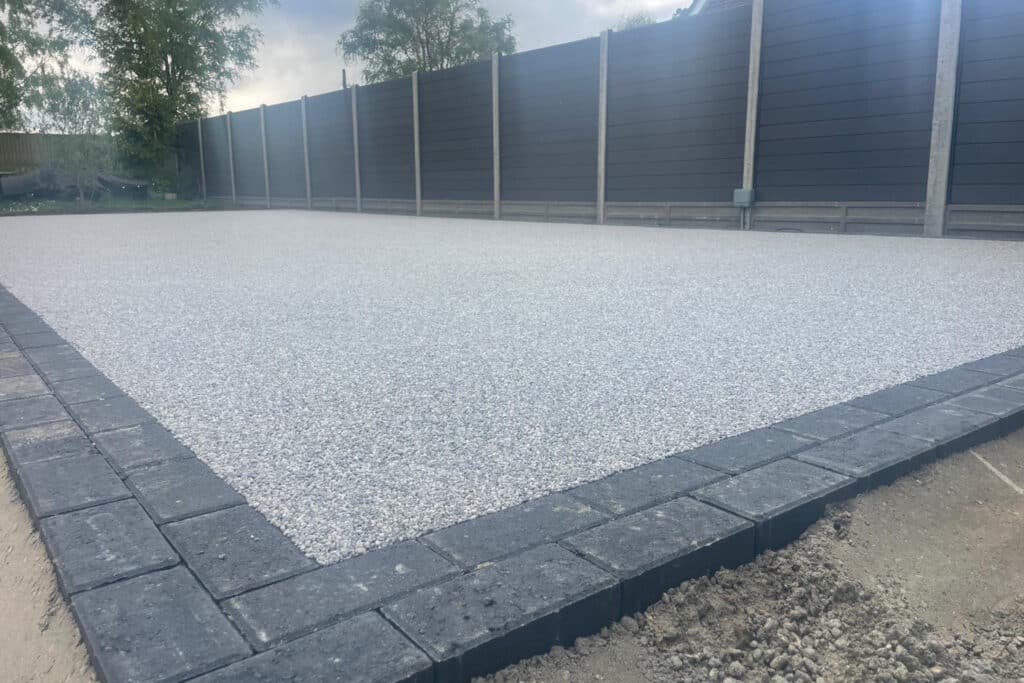
A key difference is how each surface handles rainwater. A properly designed resin bound system can allow water to drain through the surface and into a suitable permeable base. This can help manage surface water and may support compliance with SuDS requirements, depending on the complete driveway design and local conditions.
Standard tarmac is generally impermeable, so water must be managed through suitable falls and drainage. Porous asphalt is available, but it is a different system and should not be confused with conventional tarmac.
Permeability depends on the full construction, not just the visible surface. Discuss drainage and site requirements with your contractor before making a decision.
Appearance and choice of colours
Resin bound surfacing provides a decorative finish, with different natural aggregates and colour blends to complement your property. Popular options include grey, golden and mixed-stone finishes, creating a more bespoke appearance than conventional black tarmac.
Tarmac has a neat, practical look that suits many properties and can work well where budget and function are the main priorities.
Installation and maintenance
Both options need proper preparation and installation to perform well. Tarmac is laid and compacted using specialist equipment, while resin bound surfacing involves mixing aggregate with resin and laying the blend evenly over a suitable prepared base.
Resin bound driveways are relatively straightforward to maintain with regular sweeping and occasional washing. Tarmac also needs routine care and may require repairs if it cracks, deforms or deteriorates. The maintenance needs of either surface will depend on its construction, use and exposure to the weather.
For more information, read our guide to how long a resin driveway takes to install.
Can you install resin over an existing driveway?
In some cases, resin bound surfacing can be installed over an existing concrete or tarmac base, provided it is structurally sound and suitable for the proposed system. Cracks, movement, poor drainage or a failing base may need to be addressed first.
Reusing a suitable base can reduce removal work and overall costs, but it should never be assumed that an existing surface is suitable without an inspection. Find out more in our guide to laying a resin driveway on concrete.
Other uses for resin bound surfacing
Resin bound materials can also create a consistent finish across other outdoor areas, including pathways, patios, steps and swimming pool surrounds. Extending the same finish across these areas can help create a coordinated outdoor space.
Choosing a driveway contractor
Whether you choose resin bound surfacing or tarmac, make sure your quote clearly explains the preparation work, base requirements, materials and installation process. Ask about drainage, guarantees and how any defects would be dealt with.
Liberty Driveways installs resin bound driveways across Northamptonshire and surrounding areas. Find out more about our resin bound driveway installation service or explore our local services in Northampton, Wellingborough, Kettering, Rushden, Corby, Oundle, Bedford, Milton Keynes, Huntingdon, Leicester, Peterborough and Rugby.
Frequently asked questions
Is a resin bound driveway more expensive than tarmac?
Usually, yes. Resin bound driveways generally have a higher upfront cost because of the materials and specialist installation. The exact difference depends on the size of the area, preparation requirements and chosen specification.
Which driveway lasts longer?
Both surfaces can provide years of service when correctly installed and maintained. Longevity depends on the quality of the base, workmanship, usage and ongoing care. Read our guide to how long a resin driveway lasts.
Is resin bound surfacing worth the extra cost?
It may be, if you value a decorative finish, a choice of aggregate colours and the potential for a permeable surface. Tarmac may suit homeowners who prioritise a lower initial cost and a straightforward finish.
Resin driveway vs tarmac: which offers better value?
Tarmac is often the more affordable choice at installation, while resin bound surfacing offers greater scope for a decorative finish and can provide a permeable surface when designed and installed correctly. The right option depends on your budget, property, drainage requirements and expectations for maintenance.
For a tailored quote and advice on your project, visit our resin bound driveways page.