
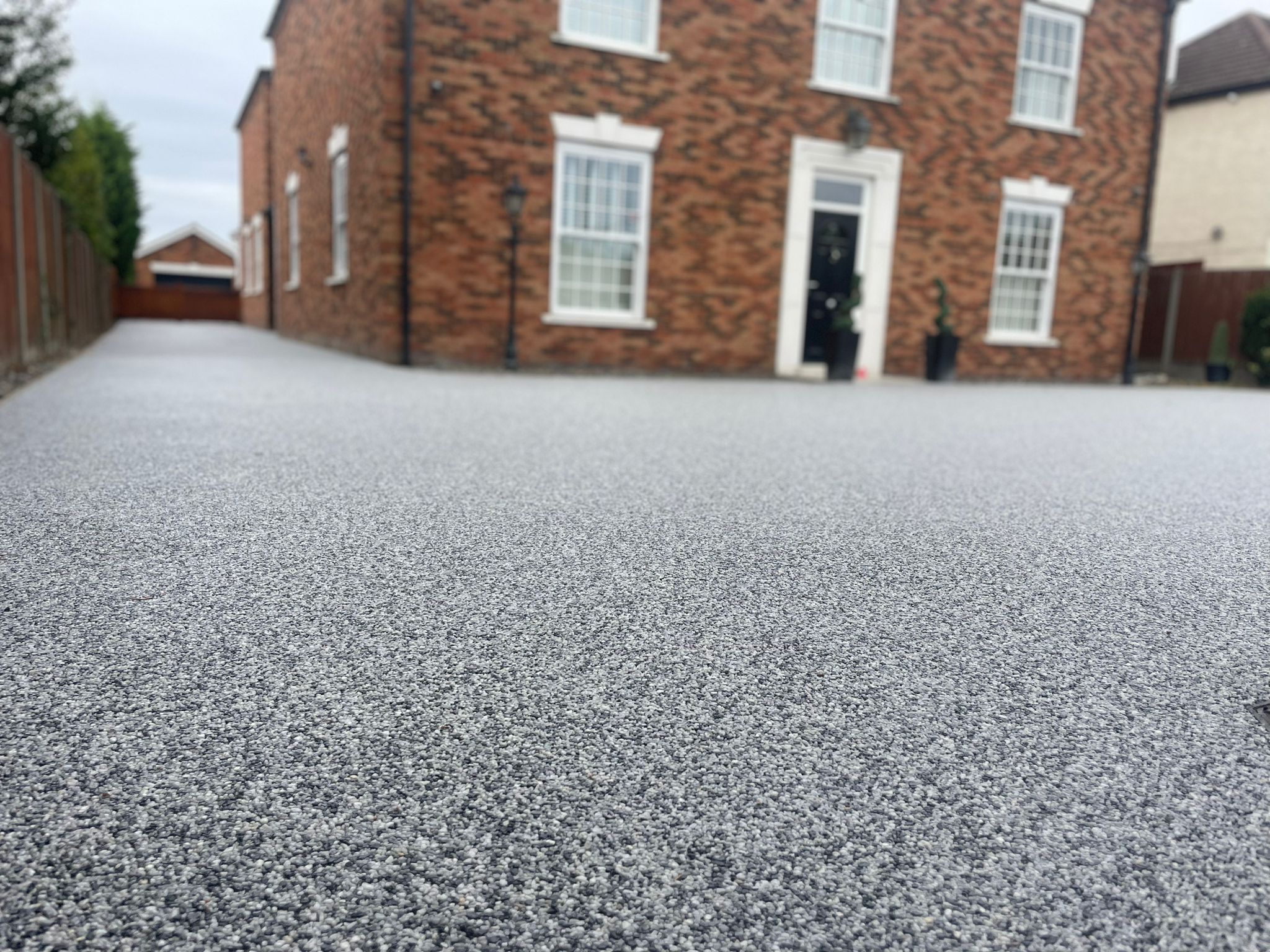
Resin bound driveways are durable and relatively easy to maintain, but regular cleaning helps preserve their appearance and prevent dirt, moss and algae from building up.
For most routine cleaning, a soft brush, water and an approved cleaning product are all you need. This guide explains how to clean resin bound surfacing, remove common stains and maintain its appearance and permeability without damaging the finish.
How to clean a resin bound driveway
Always check your installer’s maintenance guidance before using cleaning products or pressure-washing equipment.
1. Sweep away loose debris
Use a soft-bristled outdoor brush to remove leaves, soil, grass cuttings and other debris. Pay particular attention to edges, corners and areas beneath parked vehicles, where dirt can accumulate.
Avoid metal brushes and sharp tools that could damage the surface.
2. Rinse with water
Use a garden hose to wash away dust and general grime. Work methodically across the driveway, paying extra attention to areas where mud and road dirt collect. Make sure the wash water drains appropriately and does not cause problems elsewhere on the property.
3. Apply a suitable cleaner if needed
For stubborn dirt, choose a cleaning product approved for your resin bound system. Follow the manufacturer’s instructions for dilution, application and rinsing, using a soft brush to treat affected areas.
Test unfamiliar products on a discreet area first. Avoid strong acids, aggressive solvents and unapproved chemicals that could discolour the aggregate or damage the resin binder.
4. Inspect the surface
After cleaning, check for remaining stains, organic growth, loose aggregate or cracking. Clear nearby drainage channels where necessary, and seek professional advice if the surface appears damaged or water no longer drains as expected.
What equipment do you need?
- Soft-bristled brush: removes leaves, dust and loose dirt.
- Garden hose: rinses the surface and washes away residue.
- Bucket and soft hand brush: useful for treating localised stains.
- Approved driveway cleaner: helps tackle more persistent dirt.
- Protective gloves: for handling cleaning products as directed.
Can you use a pressure washer on a resin driveway?
A pressure washer may be suitable for some resin bound systems, but excessive pressure or a nozzle held too close can damage the finish or loosen aggregate. Check the manufacturer’s guidance before use.
If pressure washing is permitted, use a conservative setting, keep the nozzle at a suitable distance and move it evenly across the surface. Avoid concentrating the jet on one spot or directing it into damaged edges. For routine cleaning, a garden hose and soft brush are usually sufficient.
How to remove common resin driveway stains
The right treatment depends on the type of stain. Identify the cause first and use only products compatible with your installed system.
Oil and grease
Fresh oil spills are generally easier to remove than older stains. Blot up excess oil with an absorbent material, then apply a suitable cleaner according to the manufacturer’s instructions. Brush gently and rinse as directed.
Avoid petrol and strong solvents. Older oil marks may not disappear completely with routine cleaning, so ask a specialist about persistent stains rather than repeatedly applying stronger chemicals.
Algae and green growth
Algae is more likely to develop in shaded, damp areas where leaves and organic debris accumulate. It can make the surface look untidy and increase the risk of slipping when wet.
- Remove leaves and debris regularly.
- Brush away loose growth with a soft-bristled brush.
- Use an approved treatment if necessary, following the application and rinsing instructions.
- Investigate persistent dampness or standing water.
Avoid bleach and concentrated weed or algae treatments unless the manufacturer confirms they are suitable. Incompatible chemicals may affect the resin, surrounding plants or drainage.
Mud and soil
Remove heavy deposits carefully, brush away loose soil and rinse the area with water. Deal with muddy patches before they become ingrained, particularly after gardening, landscaping or wet weather.
Tyre marks
Light tyre marks may come away with water and gentle brushing. For more persistent marks, use a compatible cleaner and avoid abrasive pads or aggressive scrubbing that could affect the binder or aggregate.
How to prevent moss, algae and weeds
Although resin bound surfacing is relatively low-maintenance, outdoor conditions can still encourage organic growth. Regular care helps prevent debris and moisture from accumulating.
- Sweep regularly: remove leaves, soil and other organic matter.
- Keep edges clear: prevent soil and vegetation from building up along borders.
- Check shaded areas: these tend to stay damp for longer.
- Address drainage problems: investigate areas where water repeatedly collects.
- Use compatible treatments: avoid products that could damage the surface or surrounding environment.
Weeds should not normally grow through a correctly installed, intact resin bound surface. However, they can establish in accumulated debris, along edges or where the surface is damaged. Remove growth carefully and investigate recurring problems.
Resin bound driveway contractors in Northamptonshire and beyond
Liberty Driveways installs resin bound driveways and can advise on suitable surfacing options and maintenance. Our service areas include Northampton, Wellingborough, Kettering and Rushden.
We also cover Corby, Oundle, Bedford, Milton Keynes, Huntingdon, Leicester, Peterborough and Rugby.
Does cleaning affect resin driveway permeability?
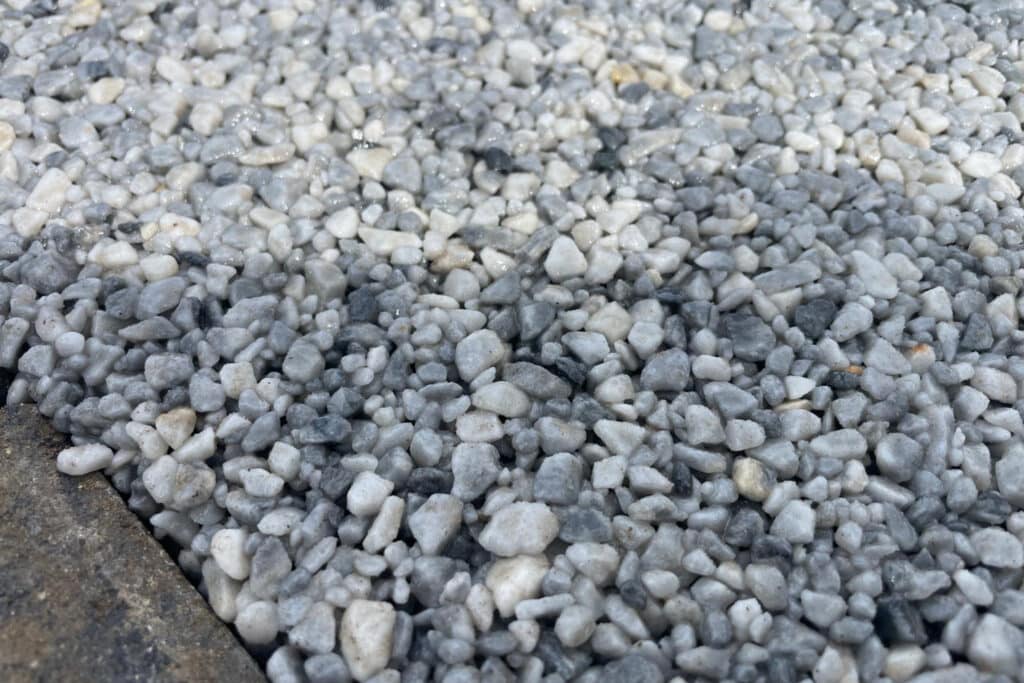
Resin bound surfacing contains interconnected spaces between the aggregate particles, allowing water to pass through when the complete driveway construction is designed for permeability. Keeping the surface clear of excessive dirt and organic debris helps prevent avoidable build-up.
Resin driveways and SuDS
SuDS help manage rainfall sustainably. A properly specified permeable resin bound driveway can support this approach by allowing water to drain through the surface into a suitable underlying construction.
To help maintain drainage performance:
- Remove leaves, soil and other debris.
- Keep associated drainage channels and outlets clear.
- Investigate persistent puddles or changes in drainage.
- Avoid cleaning products that could contaminate drainage water or harm surrounding vegetation.
Permeability depends on the entire installation, including the base and ground conditions. If drainage deteriorates, surface cleaning alone may not resolve the problem.
For most routine cleaning, a soft brush, water and an approved cleaning product are all you need. This guide explains how to clean resin bound surfacing, remove common stains and maintain its appearance and permeability without damaging the finish
How to protect the colour and finish
Resin bound driveways are available in a range of aggregate colours and textures. Regular cleaning removes dirt that can dull their appearance, but unsuitable chemicals, abrasive tools and excessive pressure may damage the finish.
Use soft brushes and approved cleaners, and test unfamiliar products on a discreet area. Do not assume that a product suitable for concrete or paving is also safe for resin surfacing.
Cleaning cannot necessarily reverse fading, UV-related discolouration, age-related deterioration or installation defects. A specialist can help determine whether a change in appearance is caused by removable dirt or more permanent damage.
How often should you clean a resin driveway?
Cleaning frequency depends on how heavily the driveway is used and its surroundings. Shaded areas and driveways beneath trees may need more attention than open, sunny surfaces.
- Weekly or as needed: sweep away leaves and loose debris, particularly in autumn.
- Every few weeks or when dirty: rinse off dust and general grime.
- Seasonally: check for algae, moss, staining and drainage issues.
- Promptly: deal with oil spills and other fresh stains.
Follow the maintenance instructions supplied with your particular resin bound system, as these recommendations are a general guide.
Can you clean other resin bound surfaces in the same way?
The same basic principles apply to many other resin bound installations, although cleaning products and precautions may vary by location.
- Resin bound pathways benefit from regular sweeping to remove leaves and garden debris.
- Resin bound swimming pool surrounds need cleaners suitable for the surface and pool environment.
- Resin bound steps should be kept clear of debris that could create a slip or trip hazard.
- Resin bound patios can generally be maintained with sweeping and appropriate washing.
When should you contact a resin driveway specialist?
Most everyday dirt and light staining can be treated at home. Professional advice is recommended if you notice:
- Loose aggregate or material coming away from the surface.
- Cracks, depressions or signs of movement.
- Persistent puddles or deteriorating drainage.
- Stains that remain after suitable cleaning.
- Discolouration or damage following the use of a cleaning product.
A specialist can identify the cause and recommend appropriate remedial work. Repeated scrubbing or stronger chemicals may make some problems worse.
Frequently asked questions about cleaning resin driveways
What is the best way to clean a resin driveway?
Sweep away loose debris, rinse with water and use a compatible cleaning product for stubborn dirt if necessary. Follow your installer’s maintenance advice.
Can I use washing-up liquid on a resin driveway?
Check the resin system manufacturer’s guidance before using household detergent. If approved, test it on a small, discreet area first.
Can I use bleach to remove algae?
Avoid bleach unless the manufacturer confirms it is suitable for your system. An incompatible chemical could damage the surface or affect the surrounding environment.
Can a pressure washer damage resin bound surfacing?
Yes. Excessive pressure or a nozzle held too close can damage the finish or loosen aggregate. Check the manufacturer’s recommendations before use.
How do I stop my resin driveway going green?
Remove leaves and debris regularly, clean shaded areas and investigate persistent dampness. Treat algae with a product approved for resin bound surfacing.
Does a resin driveway need sealing?
Not necessarily. Requirements vary by system, and an unsuitable sealant could affect the appearance or permeability. Ask your installer before applying a coating.
Keep your resin driveway looking its best
Regular sweeping, occasional washing and prompt attention to stains will help keep your resin bound driveway looking tidy. Using suitable cleaning methods also reduces the risk of damaging the surface.
To explore installation options, colours and finishes, visit our resin bound driveways page. If you are planning a new driveway or need advice about an existing surface, contact Liberty Driveways to discuss your requirements.