
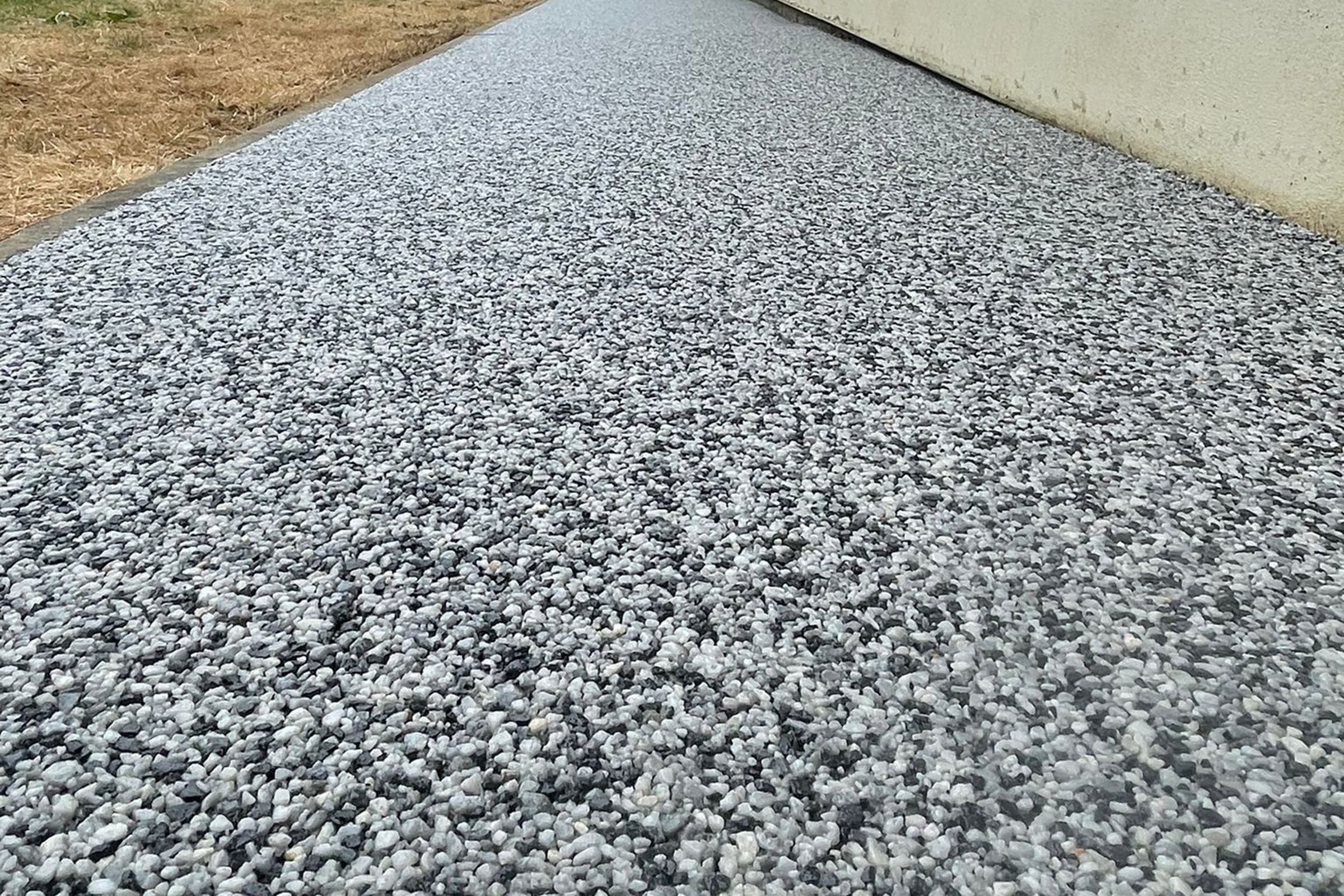
Yes, you can often lay a resin bound driveway over existing concrete, provided the base is structurally sound, stable and suitable for the chosen system. Reusing the concrete can reduce excavation, waste and installation costs while giving your driveway a fresh, decorative finish.
However, concrete is impermeable, so drainage, surface preparation and the condition of the existing base must be assessed before work begins. Liberty Driveways can help you determine whether your concrete driveway is suitable for a new resin bound surface or whether repairs or replacement are necessary.
When can you lay resin bound surfacing over concrete?
The existing concrete must provide a stable foundation. Covering a damaged or unsuitable base can lead to cracking, poor adhesion and premature failure.
What should you check before installation?
- Cracks and damage: repair suitable defects and investigate significant cracking or movement before proceeding.
- Surface condition: remove oil, grease, paint, moss and loose material that could affect adhesion.
- Levels: check for uneven areas and ensure the additional surface thickness will not obstruct garage entrances, door thresholds or drains.
- Moisture: confirm that the concrete meets the resin manufacturer’s requirements.
- Drainage: establish how rainwater will be managed, particularly because the concrete prevents natural infiltration into the ground beneath.
If the concrete is crumbling, extensively cracked or unstable, removing and replacing it may be more cost-effective than installing a new surface over it.
Does resin bound surfacing over concrete remain permeable?
Resin bound surfacing combines aggregate with a specialist resin binder to create a decorative finish with interconnected gaps that allow water to pass through.
However, a permeable resin bound surface laid over solid concrete does not make the complete driveway permeable. Rainwater can pass through the resin layer but cannot naturally drain into the ground through the concrete beneath.
How can drainage be managed?
The appropriate solution depends on the driveway layout, ground conditions and intended construction. Options may include:
- Installing suitable drainage channels to collect and direct surface water.
- Creating appropriate falls to prevent pooling and direct water away from the property.
- Removing the concrete and installing a suitable permeable sub-base where natural infiltration is required.
SuDS requirements should also be considered when replacing or creating a driveway. Resin bound surfacing can form part of a suitable SuDS solution, but the entire construction must manage rainfall appropriately. Retaining impermeable concrete underneath may mean that additional drainage measures are needed.
Resin bound driveways are available in a wide range of aggregate blends, making it easy to complement your property’s appearance.
Choosing colours and finishes
- Grey and charcoal: suit contemporary homes and modern landscaping.
- Natural stone blends: complement traditional brickwork and stone façades.
- Mixed aggregates: combine complementary colours for a distinctive finish.
- Contrasting borders: frame the driveway and define its edges.
Different colours can also coordinate the driveway with other outdoor surfaces, provided the base and materials are suitable.
Other resin bound surfaces
Resin bound aggregate can also be used for other outdoor areas, subject to the suitability of the base and drainage arrangements.
- Resin bound pathways for garden access and entrances.
- Resin bound swimming pool surrounds for coordinated poolside areas.
- Resin bound steps to complement adjoining surfaces.
- Resin bound patios for attractive outdoor living spaces.
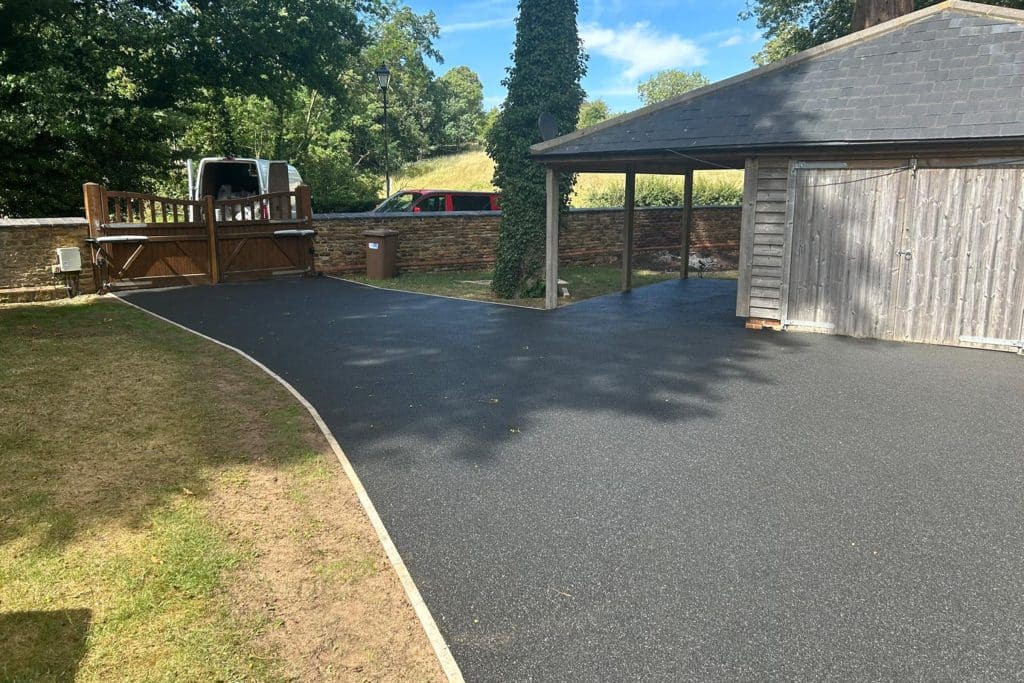
How is resin laid over an existing concrete driveway?
Once the concrete has been assessed and confirmed as suitable, the installation involves several key stages.
1. Prepare the concrete
- Mechanically grind or abrade the surface where required.
- Remove contaminants, loose coatings and dust.
- Repair suitable cracks, holes and damaged areas.
- Check moisture levels and confirm the base meets the system specification.
2. Check drainage and finished levels
Confirm the falls, drainage arrangements and finished height before applying the new surface. Address any issues that could cause standing water or interfere with adjoining surfaces.
3. Apply the appropriate bonding system
Depending on the chosen product, a compatible primer or bonding treatment may be necessary. The manufacturer’s instructions must be followed to ensure the resin system is suitable for application over concrete.
4. Mix and lay the resin bound aggregate
The resin and aggregate are measured and mixed to the specified proportions, then spread and smoothed to achieve an even depth and consistent finish. Decorative borders can be incorporated where required.
5. Allow the surface to cure
The completed driveway must be protected while the resin cures. The time before pedestrian or vehicle use depends on the selected materials and site conditions.
What equipment is needed?
Professional installation requires suitable equipment for preparing the concrete and applying the resin bound mixture, including:
- Mechanical grinders and dust extraction: prepare the concrete and control dust.
- Cleaning and repair equipment: remove contaminants and address suitable defects.
- Moisture-testing equipment: check that the base meets the system requirements.
- Forced-action mixers: combine the aggregate and resin consistently.
- Smoothing tools: achieve an even surface and neat edges.
Correct preparation and application are essential to achieving a durable finish.
Choosing resin bound driveway contractors
Experienced resin bound driveway contractors should assess the existing concrete, explain the preparation required and recommend a suitable drainage solution. Before proceeding, make sure you understand the proposed installation method, finished levels, curing time and aftercare requirements.
Liberty Driveways provides driveway services across Northamptonshire and surrounding areas, including Northampton, Wellingborough, Kettering, Rushden, Corby, Oundle, Bedford, Milton Keynes, Huntingdon, Peterborough and Leicester.
Frequently asked questions
Can you lay resin directly onto concrete?
Yes, if the concrete is sound, stable and compatible with the chosen system. Preparation, repairs and a suitable bonding treatment may be required.
Will the resin crack if the concrete cracks?
It can. Significant movement or cracking in the underlying concrete may affect the new surface, so defects should be assessed before installation.
Do you need to remove the concrete first?
Not always. Retaining suitable concrete can reduce excavation and waste. However, extensive damage or the need for a fully permeable construction may make removal the better option.
How long does installation take?
The timescale depends on the driveway’s size, the condition of the concrete, preparation requirements, materials and weather. The surface must also cure before it can be used.
Arrange a resin driveway assessment
Installing a resin bound driveway over concrete can be an effective way to improve your property’s appearance without removing a suitable existing base. The key is to check the concrete, prepare it correctly and plan drainage before work begins.
Contact Liberty Driveways to discuss your driveway and find out whether your existing concrete is suitable for a new resin bound surface.