
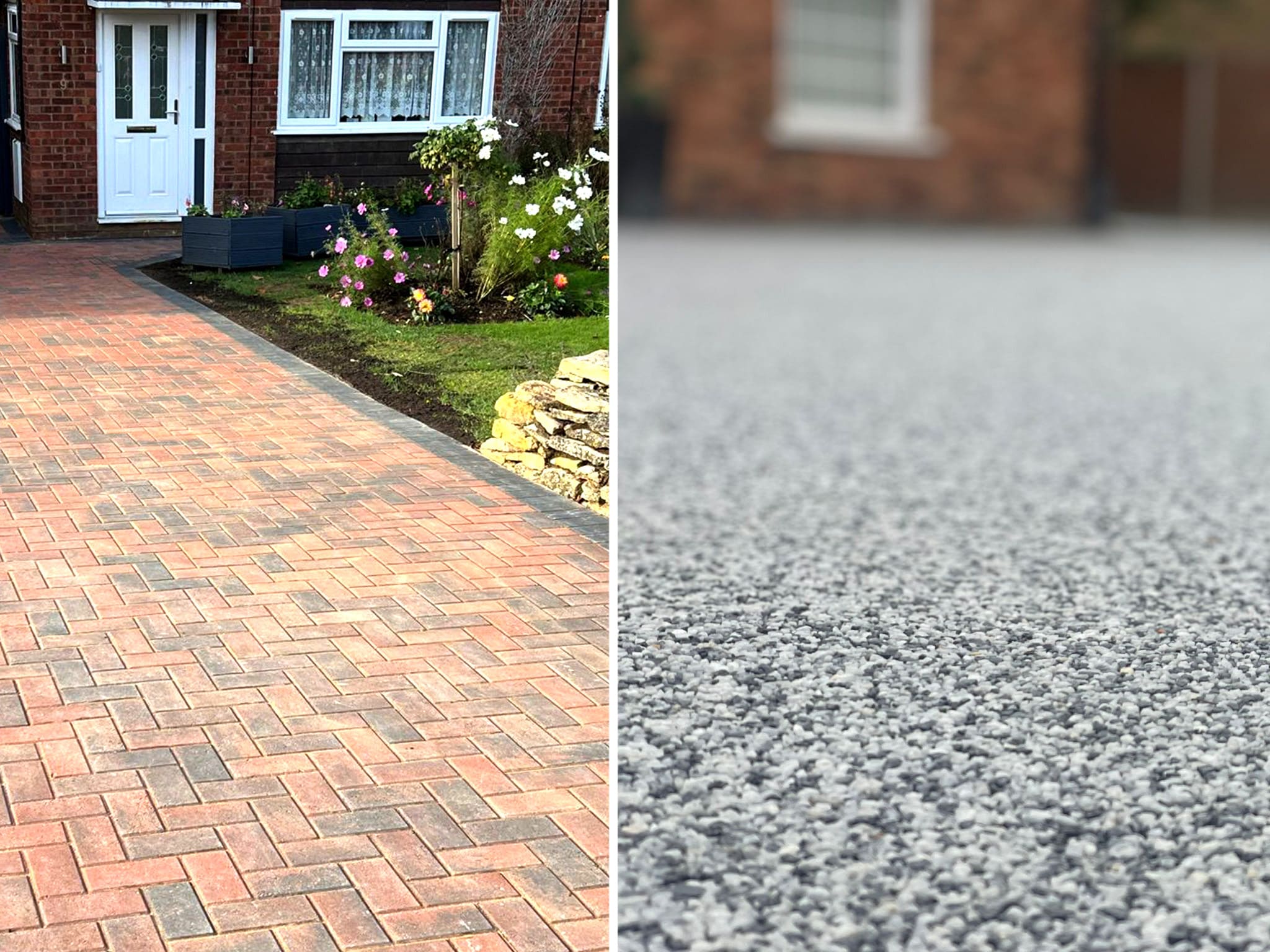
The final price depends on the driveway size, the condition of the existing surface, the groundwork required and the materials selected. In this guide, we compare resin driveway cost vs block paving, covering the key factors that influence price and long-term value.
How much does a resin driveway cost compared with block paving?
Neither option has a fixed price. Resin bound driveways and block paving are usually priced according to the area covered and the work required to create a stable, durable surface.
What affects the price?
The main cost factors for both driveway types include:
- Size: Larger driveways cost more overall, although bigger projects may benefit from economies of scale.
- Ground preparation: Excavation, removing old materials, repairing the existing base and installing a suitable sub-base can add considerably to the price.
- Access: Restricted access and awkward layouts can increase labour and equipment requirements.
- Materials: Resin and aggregate specifications affect resin driveway prices, while block type, size and quality influence paving costs.
- Design: Decorative borders, contrasting colours, curves and intricate layouts can increase installation time.
- Drainage: The need for drainage channels, additional groundwork or a permeable base can affect the overall budget.
Block paving may involve more manual laying and cutting, particularly with complex patterns. Resin bound surfacing requires specialist mixing and finishing, so the relative cost depends on the design and site conditions.
When comparing quotations, check that both include equivalent groundwork, waste removal, drainage and finishing details. A lower initial price may not cover everything needed for a reliable installation.
For details of the available finishes and installation options, visit our resin bound driveways page.
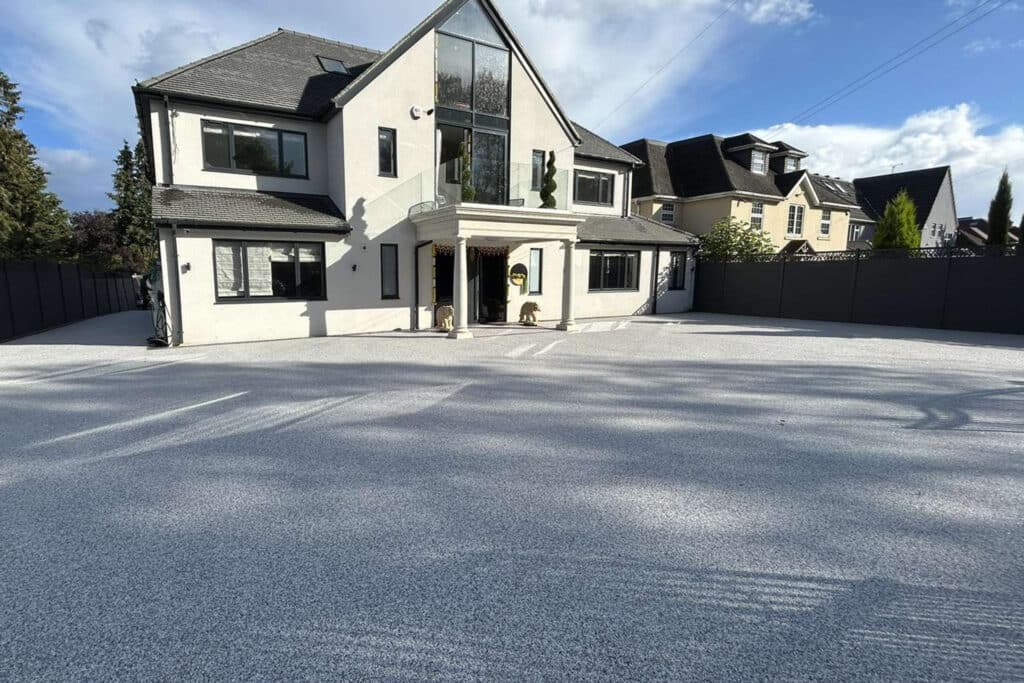
The right choice depends on your budget, site conditions, drainage requirements and preferred appearance. A well-prepared foundation and professional installation are essential whichever surface you choose.
Permeability and drainage
Drainage is an important consideration, particularly where rainwater collects near the property or runs towards the road.
Resin bound driveways
Resin bound aggregate is mixed with resin before being laid, creating a textured surface with small interconnected voids. When installed over a suitably designed permeable base, water can pass through the surface and into the underlying structure.
Benefits can include:
- Reduced surface water where the complete system allows effective infiltration.
- A relatively seamless finish without conventional block-paving joints.
- A decorative surface that combines drainage performance with a choice of aggregate blends.
Permeability depends on the complete installation, including the sub-base, ground conditions and drainage design. A permeable top layer alone cannot compensate for an unsuitable foundation.
Block paving and SuDS
Traditional block paving is not automatically permeable. Water management depends on the blocks, jointing material and construction beneath them.
Options include:
- Conventional block paving: Usually relies on suitable falls and drainage channels to manage runoff.
- Permeable block paving: Uses specially designed blocks, open joints and a suitable sub-base to allow water to infiltrate.
- Additional drainage: May be required where the ground cannot absorb water sufficiently.
Site conditions, drainage requirements and applicable planning rules should be checked before work begins. For more on the advantages and limitations of resin, read our guide to the pros and cons of resin driveways.
Aesthetics: colour, texture and design
Both surfaces offer plenty of design flexibility, but their finished appearances are quite different.
Resin bound colours and aggregate combinations
Resin bound surfacing uses natural or coloured aggregates mixed with resin to create a decorative, relatively seamless finish. Combining different stones allows for subtle variations or more distinctive designs.
Popular options include:
- Grey resin bound driveways: Contemporary grey blends complement modern properties, brickwork and rendered façades.
- Natural stone colours: Buff, beige, golden and brown aggregates suit traditional homes and garden landscaping.
- Mixed aggregate blends: Different stone colours create depth and natural variation.
- Contrasting borders: A different aggregate blend can frame the driveway or distinguish pathways.
- Decorative sections: Colour changes can define parking areas or highlight entrances.
The result depends on the selected aggregate blend, so reviewing samples before installation can help you choose a finish that complements your property.
Choosing a driveway contractor
Whether you choose resin bound surfacing or block paving, request a detailed quotation that clearly explains the work involved.
Check that the quote covers:
- Excavation and removal of waste, where required.
- Base preparation and the specified sub-base.
- Drainage and finished levels.
- Materials, colours, edging and decorative details.
- Labour, equipment and finishing work.
- Guarantees and aftercare guidance.
Liberty Driveways serves homeowners across Northamptonshire and surrounding areas. If you are considering a new driveway in Northampton, we can help you explore the options for your property.
Our service area also includes Wellingborough, Kettering, Rushden, Corby and Oundle.
We also work in Bedford, Milton Keynes, Huntingdon, Leicester, Peterborough and Rugby.
Block paving patterns and colours
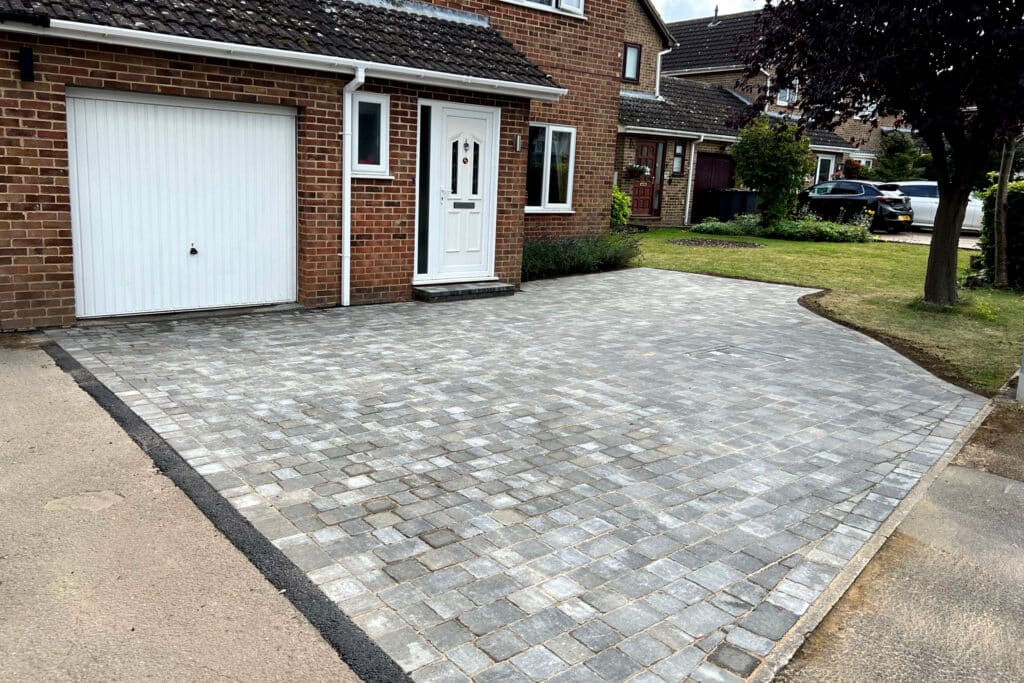
Block paving creates a more structured appearance, with visible blocks arranged in a chosen pattern.
- Herringbone patterns create a distinctive, traditional finish.
- Basketweave and stretcher-bond layouts offer different visual effects.
- Contrasting blocks can frame the driveway or define separate areas.
- Different block shapes, sizes and colours provide further design options.
Resin offers a continuous aggregate finish, while block paving emphasises pattern and individual units. The best choice comes down to the style you prefer and how you want the driveway to complement your home.
Installation and equipment
Both surfaces need a stable foundation and careful preparation. Poor groundwork can lead to cracking, movement, drainage problems or premature deterioration, regardless of the material used.
Installing a resin bound driveway
A typical installation involves:
- Site assessment: Checking dimensions, access, drainage and the condition of the existing surface.
- Ground preparation: Removing unsuitable material and repairing or replacing the base where necessary.
- Base and edging: Preparing a suitable foundation and installing any required edging or borders.
- Mixing: Combining the selected aggregate and resin in the correct proportions.
- Laying: Spreading and trowelling the mixture to achieve a consistent thickness and finish.
- Curing: Allowing the surface to harden for the specified period before it is used.
Professional installers use equipment such as forced-action mixers, preparation tools, measuring equipment and finishing trowels. Consistent mixing and skilled application help achieve an even finish and reduce the risk of defects.
Weather conditions and the resin specification affect working and curing times. Find out more in our guide to how long a resin driveway takes to install.
Installing block paving
Block paving generally requires:
- Excavation: Removing the existing surface and sufficient ground for the new construction.
- Sub-base preparation: Installing and compacting suitable aggregate.
- Edge restraints: Securing the perimeter to help prevent movement.
- Bedding layer: Preparing and levelling the laying course.
- Laying and cutting: Placing the blocks in the chosen pattern and cutting them to fit edges and obstacles.
- Jointing and compaction: Filling the joints and compacting the paving using suitable equipment.
Block paving can require substantial manual work, especially where intricate patterns and numerous cuts are involved. Resin bound surfacing has different specialist requirements, so installation costs depend on the scope of work rather than the material alone.
Maintenance and long-term value
The initial installation price is only part of the overall cost. Routine care and the potential for future repairs should also influence your decision.
Maintaining resin bound surfacing
Resin bound driveways generally need regular sweeping and occasional washing to remove dirt and debris. Leaves, moss and algae should be addressed before they build up, particularly in damp or shaded areas.
- Sweep away leaves, soil and loose debris regularly.
- Remove oil and other stains promptly with suitable cleaning products.
- Use appropriate cleaning methods and avoid unnecessarily aggressive pressure washing.
- Keep drainage channels clear where fitted.
- Follow the installer’s advice on cleaning and repairs.
Resin is not maintenance-free, and repairs can be noticeable if the original aggregate blend is difficult to match.
Maintaining block paving
Block paving may need additional attention to its joints and individual blocks.
- Remove weeds and organic debris from joints.
- Replace jointing material where it has been lost.
- Check for loose, rocking or sunken blocks.
- Lift and relay affected areas where movement or settlement occurs.
Individual blocks can often be replaced without renewing the whole driveway. However, joint maintenance and repairs should be included in your long-term cost considerations.
Can resin be installed over an existing driveway?
Resin bound surfacing can sometimes be installed over existing concrete or asphalt if the base is stable, structurally sound and suitable for the proposed system. Cracking, movement, drainage and other defects must be assessed first.
If the existing surface is unsuitable, removal and reconstruction may be necessary, increasing the overall price. Block paving may also require excavation and a new foundation if the existing construction is inadequate.
Read our guide to laying a resin driveway on concrete for more information.
Other uses for resin bound surfacing
Resin bound materials can also create a coordinated finish across other outdoor areas.
- Resin bound pathways provide decorative routes between entrances, gardens and outdoor spaces.
- Resin bound pool surrounds can create a neat finish around a swimming pool, with the specification suited to the environment.
- Resin bound steps help connect different levels and complement surrounding paving.
- Resin bound patios extend the aggregate finish into garden seating and entertaining areas.
Each application needs a suitable base, drainage arrangement and surface specification.
Frequently asked questions
Is a resin driveway cheaper than block paving?
Not always. The cost depends on the site, preparation, materials and design. Compare detailed quotations that include the same scope of work rather than relying on a general price per square metre.
Which driveway lasts longer?
Both can provide long service when properly installed and maintained. The quality of the foundation, drainage, materials and workmanship all affect longevity.
Are resin bound driveways permeable?
A correctly specified resin bound system can allow water to drain through the surface. The base and sub-base must also be suitable, and not every resin-based driveway system is permeable.
Can I choose different colours for a resin driveway?
Yes. Different aggregate blends can create neutral finishes, contrasting borders or more distinctive designs. Samples can help you choose a colour that suits your property.
What should I compare when getting quotes?
Check the groundwork, base preparation, drainage, materials, edging, waste removal and aftercare arrangements. A detailed, like-for-like comparison is the best way to assess value.
Resin driveway cost vs block paving: the verdict
Resin bound driveways are worth considering if you want a relatively seamless finish, a wide choice of aggregate colours and the potential for a permeable surface. Block paving may suit you better if you prefer traditional patterns and the flexibility to replace individual blocks.
The right choice depends on your budget, site conditions, drainage requirements and preferred appearance. A well-prepared foundation and professional installation are essential whichever surface you choose.
To explore finishes and discuss your project, visit our resin bound driveways page and contact Liberty Driveways for advice.