
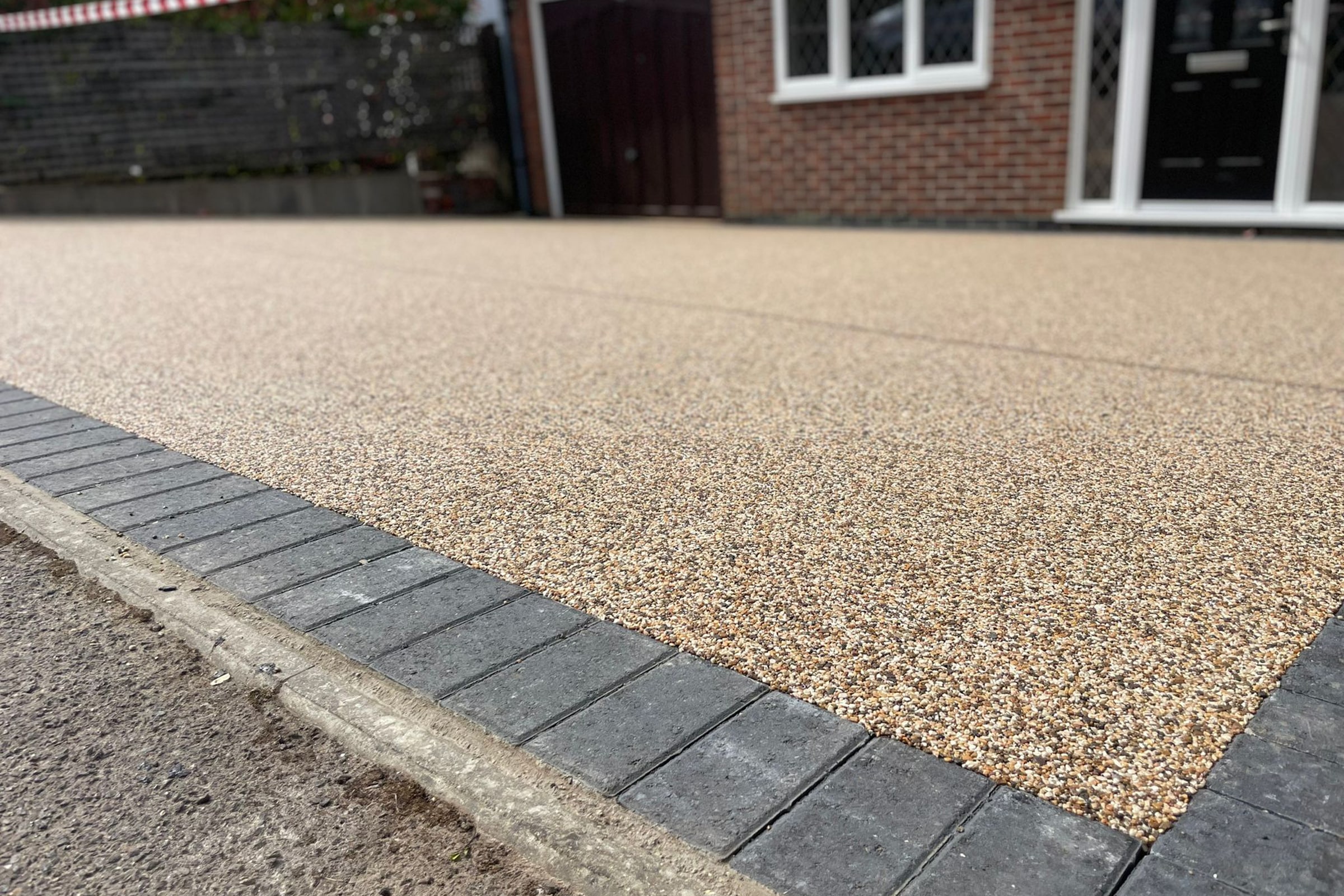
Resin bound driveways are a popular choice for homeowners looking for an attractive, durable and relatively low-maintenance alternative to traditional driveway materials. With a choice of aggregate colours and textures, a seamless finish and the potential for effective surface drainage, resin bound surfacing offers several advantages over block paving, concrete and tarmac.
However, resin is not suitable for every property. Installation costs, the condition of the existing base, weather conditions and the quality of the workmanship all need to be considered before making a decision.
This guide explores the main pros and cons of resin driveways, including permeability, SuDS, appearance, installation, equipment and maintenance.
What are the pros and cons of resin driveways?
Advantages of resin bound driveways
- Permeability: a correctly designed system can allow rainwater to drain through the surface.
- Attractive appearance: a wide range of natural aggregate colours and combinations is available.
- Seamless finish: creates a continuous surface without the individual joints found in block paving.
- Design flexibility: contrasting borders, colour blends and decorative patterns can be incorporated.
- Low routine maintenance: sweeping and occasional washing help keep the surface clean.
- Versatility: suitable for driveways, pathways, patios, steps and swimming pool surrounds when correctly specified.
Disadvantages of resin bound driveways
- Initial cost: professional installation can cost more than some basic driveway finishes.
- Base preparation: an unsuitable or damaged foundation may need extensive repairs or replacement.
- Weather restrictions: rain, damp conditions and low temperatures can delay installation.
- Specialist installation: accurate mixing, appropriate equipment and skilled finishing are essential.
- Visible repairs: replacement aggregate may not perfectly match the original surface.
- Site suitability: drainage, ground conditions and expected loading must be considered before choosing a system.
With a choice of aggregate colours and textures, a seamless finish and the potential for effective surface drainage, resin bound surfacing offers several advantages over block paving, concrete and tarmac
The advantages of resin bound driveways
1. Permeability and drainage
One of the main benefits of resin bound driveways is their potential permeability. The aggregate is mixed with resin binder before being laid, leaving interconnected voids within the finished surface that allow water to pass through.
When installed over a suitable permeable construction, this can help reduce surface water run-off compared with an impermeable driveway.
Key drainage benefits
- Rainwater can pass through the surface rather than collecting on top.
- A suitably designed installation can help reduce puddling.
- The surface can form part of a wider property drainage strategy.
Permeability depends on the complete construction, including the sub-base and ground conditions. A permeable finish alone will not resolve every drainage issue, particularly where the soil drains poorly.
2. Supporting SuDS
SuDS are designed to manage rainwater sustainably and reduce pressure on conventional drainage systems. A properly designed resin bound driveway can contribute by allowing water to pass through the surface into a suitable drainage construction.
What needs to be considered?
- Ground conditions: establish whether the soil can absorb infiltrating water.
- Sub-base design: select suitable materials and construction depths for drainage and vehicle loading.
- Water management: plan how excess water will be handled if infiltration is limited.
- Planning requirements: check applicable rules before replacing a large area of an existing driveway.
Not every resin driveway automatically meets all SuDS requirements. The whole installation must be assessed to determine how effectively it manages water.
3. A choice of colours and textures
Resin bound driveways offer considerable design flexibility. Different natural aggregates can be combined to complement a property’s brickwork, stonework, render and other exterior features.
Popular resin driveway design ideas
- Grey resin bound driveway: suits contemporary properties and modern exterior finishes.
- Natural stone colours: beige, buff and golden tones complement traditional brick and stone.
- Mixed aggregate colours: create depth and variation across the surface.
- Resin driveway with border: a contrasting blend can define the edges or separate parking areas from pathways.
- Decorative patterns: carefully planned colour changes can introduce simple geometric details.
Aggregate samples help you judge the colour and texture in natural light and alongside existing materials. Discuss the desired finish with your installer before ordering materials, particularly if the design includes multiple colours or borders.
4. A continuous, easy-to-maintain finish
Unlike block paving, resin bound surfacing creates a continuous finish without individual paving blocks or conventional sand joints. This gives the driveway a consistent appearance and makes routine cleaning relatively straightforward.
- Sweep away leaves, soil and loose debris regularly.
- Wash the surface when necessary to remove everyday dirt.
- Deal with oil stains and organic growth using suitable cleaning methods.
- Keep any nearby drainage points clear.
Maintenance requirements vary with the location, surrounding vegetation and level of use. Follow the installer’s care instructions and read our guide to cleaning a resin driveway for more advice.
The surface texture and slip resistance also depend on the aggregate, contamination and weather conditions. Find out more in our article about whether resin driveways are slippery.
5. Other uses for resin bound surfacing
Resin bound materials can be used beyond driveways, helping create a consistent appearance across different outdoor areas. Each application needs a suitable base and specification for its intended use.
- Resin bound pathways for garden paths and access routes.
- Resin bound swimming pool surrounds for decorative poolside areas.
- Resin bound steps to coordinate with adjoining surfaces.
- Resin bound patios for outdoor seating and entertaining areas.

The disadvantages of resin bound driveways
1. Initial installation cost
A professionally installed resin bound driveway can require a greater initial investment than some basic surfacing options. The price depends on the size and layout of the area, the aggregate selected and the amount of preparation needed.
Factors that affect the cost
- Driveway dimensions and access.
- Condition of the existing surface and sub-base.
- Excavation, repairs or new foundations.
- Drainage requirements.
- Aggregate choice, decorative borders and patterns.
When comparing quotes, check that the proposed work includes appropriate preparation and drainage considerations. A lower price may reflect a different specification or less groundwork.
For a comparison with another popular driveway material, see our guide to resin driveway cost versus block paving.
2. The existing base may need work
A resin bound surface relies on a stable foundation. Cracked, loose, uneven or moving concrete and tarmac may need attention before a new finish can be installed.
Typical preparation work
- Inspecting the base for cracks, movement and deterioration.
- Removing dirt, oil, grease and loose material.
- Mechanically preparing compatible surfaces where required.
- Repairing defects and correcting levels.
- Installing a new base if the existing construction is unsuitable.
Some existing concrete or tarmac driveways can be retained, provided they are sound and compatible with the proposed system. Read our guide to laying resin over concrete for more information.
3. Installation is weather-dependent
Rain, damp conditions and low temperatures can affect resin application and curing. Installers may need to postpone work until conditions meet the manufacturer’s requirements.
- The base must be suitably prepared and dry where required.
- Resin and aggregate must be mixed and laid within the specified working time.
- The finished surface must be protected while curing.
- Vehicle access must wait until the installer confirms that the surface is ready.
A straightforward driveway may take around one or two days to prepare and lay when the base is ready. Major groundwork and curing can extend the overall schedule. See our guide to resin driveway installation times.
4. Specialist skills and equipment are required
Achieving a consistent finish involves more than spreading a mixture over the base. The aggregate and binder must be combined in the correct proportions, then laid and hand-finished before the mixture becomes difficult to work.
Equipment used during installation
- Mechanical grinders: prepare suitable existing surfaces and remove unwanted coatings where appropriate.
- Dust extraction equipment: controls dust during mechanical preparation.
- Cleaning equipment: removes contaminants before laying.
- Forced-action mixers: combine resin and aggregate thoroughly.
- Trowels and smoothing tools: spread the mixture and create an even finish.
- Compaction equipment: prepares the sub-base when new groundwork is required.
- Personal protective equipment: helps protect installers when handling materials and operating machinery.
Correct equipment, careful preparation and adherence to the manufacturer’s instructions help reduce the risk of an uneven or defective finish.
5. Repairs may be visible
Although a properly installed resin bound driveway can provide years of service, damage may occur through impact, underlying movement or other causes. A local repair can be noticeable if the replacement aggregate differs from the original or the surrounding surface has weathered.
- Keeping details of the original aggregate blend can help with colour matching.
- Underlying defects should be corrected before repairs are carried out.
- Extensive damage may require more substantial remedial work.
6. Resin bound and resin bonded are different
The terms resin bound and resin bonded are sometimes confused, but they describe different installation methods.
- Resin bound: the aggregate is mixed with resin before laying, creating a consistent finish with interconnected voids that can allow water to drain through.
- Resin bonded: resin is applied to the base and loose aggregate is scattered over it, producing a different texture that generally does not provide the same permeable construction.
If permeability is important, ensure the quotation specifies resin bound surfacing and explains how the complete driveway will manage water. Read our guide to resin bound versus resin bonded surfacing for a fuller comparison.
Are resin bound driveways worth it?
Resin bound driveways can be a good choice if you want a decorative, continuous finish with a wide choice of aggregate colours and the potential for effective drainage. The key is to ensure that the installation is suitable for the property and that the quote covers the work needed to achieve a lasting result.
Before choosing resin, consider whether you need:
- A specific colour or decorative border to complement your property.
- A permeable surface supported by an appropriate drainage design.
- A new base or repairs to the existing driveway.
- A finish that can continue across paths, patios or steps.
- A maintenance routine that suits the way you use the property.
Compare the complete installation proposals, not just the surface price. The suitability of the base, the quality of the materials and the installation method are all important considerations.
Resin bound driveway contractors in Northamptonshire and beyond
Choosing experienced resin bound driveway contractors helps ensure that the surface is properly specified, the base is suitable and the aggregate is installed correctly. Liberty Driveways provides driveway services in Northampton, Wellingborough, Kettering and Rushden.
We also cover Corby, Oundle, Bedford, Milton Keynes, Huntingdon, Leicester, Peterborough and Rugby.
Frequently asked questions
Are resin bound driveways permeable?
They can be. The aggregate mixture contains interconnected voids that allow water to pass through, provided the underlying construction is also designed to manage drainage appropriately.
Do resin driveways need much maintenance?
Routine care generally involves sweeping, occasional washing and dealing with stains or organic growth using suitable cleaning methods.
Can resin be laid over an existing driveway?
Sometimes. Existing concrete or tarmac may be suitable if it is stable, sound and compatible with the proposed system. The base and drainage should be assessed before installation.
Are resin driveways slippery when wet?
Slip resistance depends on the aggregate, surface finish, contamination and weather conditions. Ask your installer about suitable options for your property’s intended use.
How long does a resin bound driveway last?
Its lifespan depends on the quality of the materials, preparation, installation, loading and maintenance. A properly installed surface with a suitable base can provide years of service, although no driveway is maintenance-free.
Get a quote for a resin bound driveway
Resin bound driveways offer attractive design options, a continuous finish and the potential for effective surface drainage. The main considerations are the initial investment, site suitability and the need for professional installation.
Visit our resin bound driveways page to explore the options, or contact Liberty Driveways to discuss your property and request a quote.