
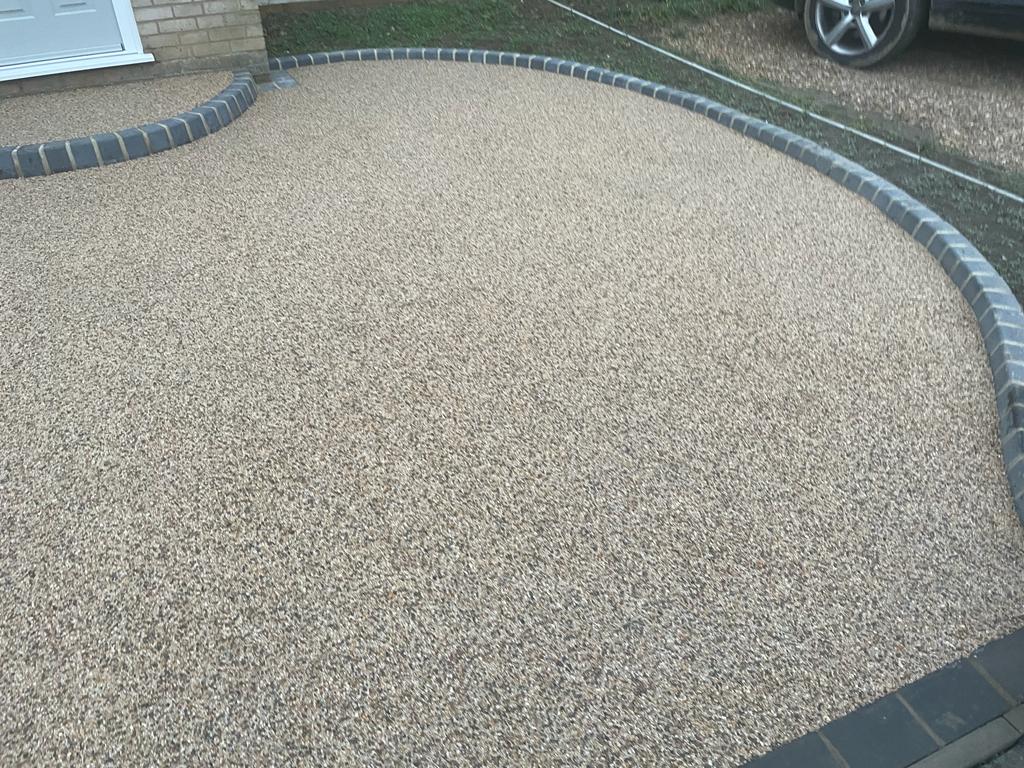
Are resin driveways slippery when wet? It is a common question for homeowners considering a new driveway. The good news is that a properly installed resin bound driveway can provide a textured surface with good grip, making it a practical option for everyday use.
However, no outdoor surface is completely slip-proof. Rain, frost, ice, moss and algae can all affect traction. The choice of aggregate, quality of installation and ongoing maintenance are important factors when considering the slip resistance of resin bound driveways.
At Liberty Driveways, we install resin bound surfaces in a range of colours and finishes. Here is what you need to know about slip resistance, drainage and choosing the right finish for your property.
Are resin bound driveways slippery when wet?
Resin bound surfacing is made by mixing natural aggregates with a clear resin binder. The mixture is laid and finished to create a textured surface, with the aggregate providing grip underfoot.
Slip resistance varies according to the materials used and the finished texture. A suitable aggregate blend and professional installation can help provide good traction, but performance will also depend on how clean the surface is and the conditions it is exposed to.
What affects slip resistance?
- Aggregate texture: the shape, size and surface characteristics of the stone influence the texture and available grip.
- Resin application: the correct resin-to-aggregate ratio and consistent mixing help produce an even finish.
- Rainwater drainage: a permeable resin bound surface allows water to pass through the gaps between the stones when installed over a suitable base.
- Surface contamination: moss, algae, mud and fallen leaves can reduce traction if allowed to accumulate.
- Weather conditions: frost and ice can make any outdoor surface slippery, including resin bound paving.
Slip resistance varies according to the materials used and the finished texture. A suitable aggregate blend and professional installation can help provide good traction, but performance will also depend on how clean the surface is and the conditions it is exposed to.
Does permeability improve driveway safety?
One advantage of resin bound surfacing is its permeability. Rainwater can drain through the interconnected spaces between the aggregate particles, helping to reduce surface water and puddling when the underlying construction is designed correctly.
Less standing water can be beneficial in wet weather, but permeability alone does not guarantee slip resistance. The aggregate finish, surface cleanliness, base construction and weather conditions all remain important.
A permeable resin bound driveway can help rainwater drain away, reducing surface pooling when the construction beneath it is suitable. However, permeability does not prevent ice from forming during freezing weather. To help maintain a safer surface during winter:
Are resin driveways slippery in winter?
- Keep the driveway clear of leaves, mud and other debris.
- Remove moss and algae using a cleaning method suitable for the installed resin system.
- Pay particular attention to shaded areas, slopes and steps where frost may persist.
- Use suitable de-icing products only after checking the manufacturer’s or installer’s advice.
- Take extra care when the surface is icy or covered in frost.
Resin bound driveways and SuDS
SuDS stands for Sustainable Urban Drainage Systems. Permeable resin bound surfacing can form part of an appropriate SuDS design by allowing rainwater to pass through the finished surface.
For effective drainage, the base and wider drainage arrangement must also be suitable. A permeable finish over an unsuitable or impermeable base may not drain as intended. Compliance with applicable drainage or planning requirements depends on the complete installation and site conditions.
Choosing a resin bound driveway finish
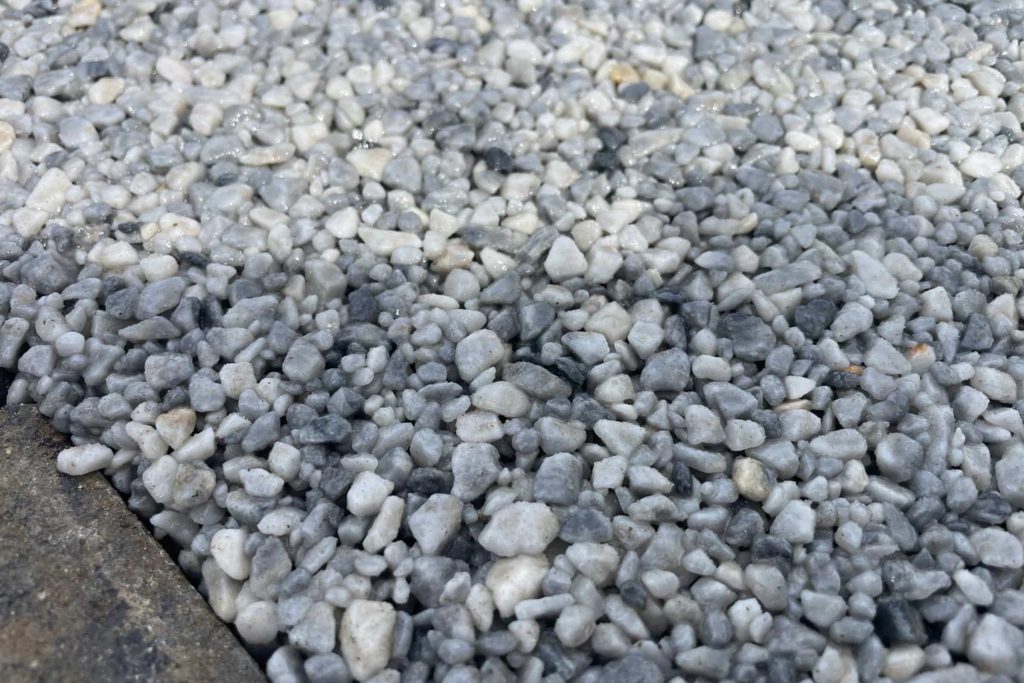
Resin bound driveways are available in a wide range of natural aggregate colours, from contemporary greys to warm golden and mixed-stone blends. Different colours can be combined to create decorative borders, contrasting sections and coordinated pathways.
When choosing a finish, consider both appearance and practical performance. The colour of an aggregate does not, by itself, indicate how slip-resistant it will be.
What should you consider?
- Aggregate selection: discuss the texture and suitability of the proposed stone blend with your installer.
- Driveway layout: consider slopes, turning areas, pedestrian routes and entrances where grip is particularly important.
- Decorative borders: use contrasting aggregate colours to define edges without compromising the overall design.
- Steps and paths: give extra attention to slip resistance in areas where people walk regularly, especially when wet.
- Samples: view aggregate samples in natural light to assess their appearance before choosing your finish.
Why professional installation matters
Correct installation is essential to the performance and durability of a resin bound driveway. The existing surface, base condition, levels and drainage should be assessed before work begins.
Key stages of installation
- Site assessment: check the existing surface, ground conditions, drainage and access.
- Base preparation: establish whether the base is suitable or needs repair or replacement.
- Material mixing: combine the resin and aggregate in the proportions specified by the system manufacturer.
- Application: lay and finish the mixture consistently to achieve an even surface.
- Curing: allow the surface to cure for the recommended period before use.
Specialist mixers, measuring equipment, preparation machinery and finishing tools help installers achieve a consistent result. Following the manufacturer’s guidance is important for the quality of the finished surface.
Maintaining slip resistance
Routine cleaning helps preserve the appearance of resin bound surfacing and prevents the build-up of organic matter that may affect grip.
- Brush away fallen leaves, loose dirt and garden debris regularly.
- Clean the surface using suitable methods and products.
- Address moss and algae, particularly in damp or shaded areas.
- Investigate persistent puddles or drainage problems.
- Seek professional advice if the surface becomes damaged or loose.
Good maintenance can help keep the surface clean, but it cannot eliminate the risks associated with ice, frost or other slippery conditions.
Other resin bound surfaces
The same type of surfacing can be used beyond driveways, although the finish must be suitable for its intended application.
- Resin bound pathways: create attractive routes between entrances, gardens and outdoor spaces.
- Resin bound pool surrounds: require careful consideration of slip resistance because the surface is frequently exposed to water.
- Resin bound steps: need particular attention to safety because slipping on steps can result in falls.
- Resin bound patios: provide a decorative finish for suitable outdoor seating and entertaining areas.
Resin bound driveway contractors in Northamptonshire and beyond
Liberty Driveways installs resin bound driveways and other external surfaces across Northamptonshire and surrounding areas. We work in Northampton, Wellingborough, Kettering and Rushden.
Our service area also includes Corby, Oundle, Bedford, Milton Keynes, Peterborough, Huntingdon, Leicester and Rugby.
So, are resin driveways slippery?
A properly installed resin bound driveway can provide good grip thanks to its textured aggregate finish. Its permeability can also help rainwater drain away, reducing surface pooling when the base is suitable.
However, slip resistance depends on the aggregate, installation, maintenance and weather conditions. No driveway surface is completely slip-proof, particularly in icy conditions. Choosing an appropriate finish and keeping it clean are important steps towards maintaining a safer outdoor surface.
Contact Liberty Driveways to discuss your driveway project and find out more about suitable resin bound finishes for your property.