
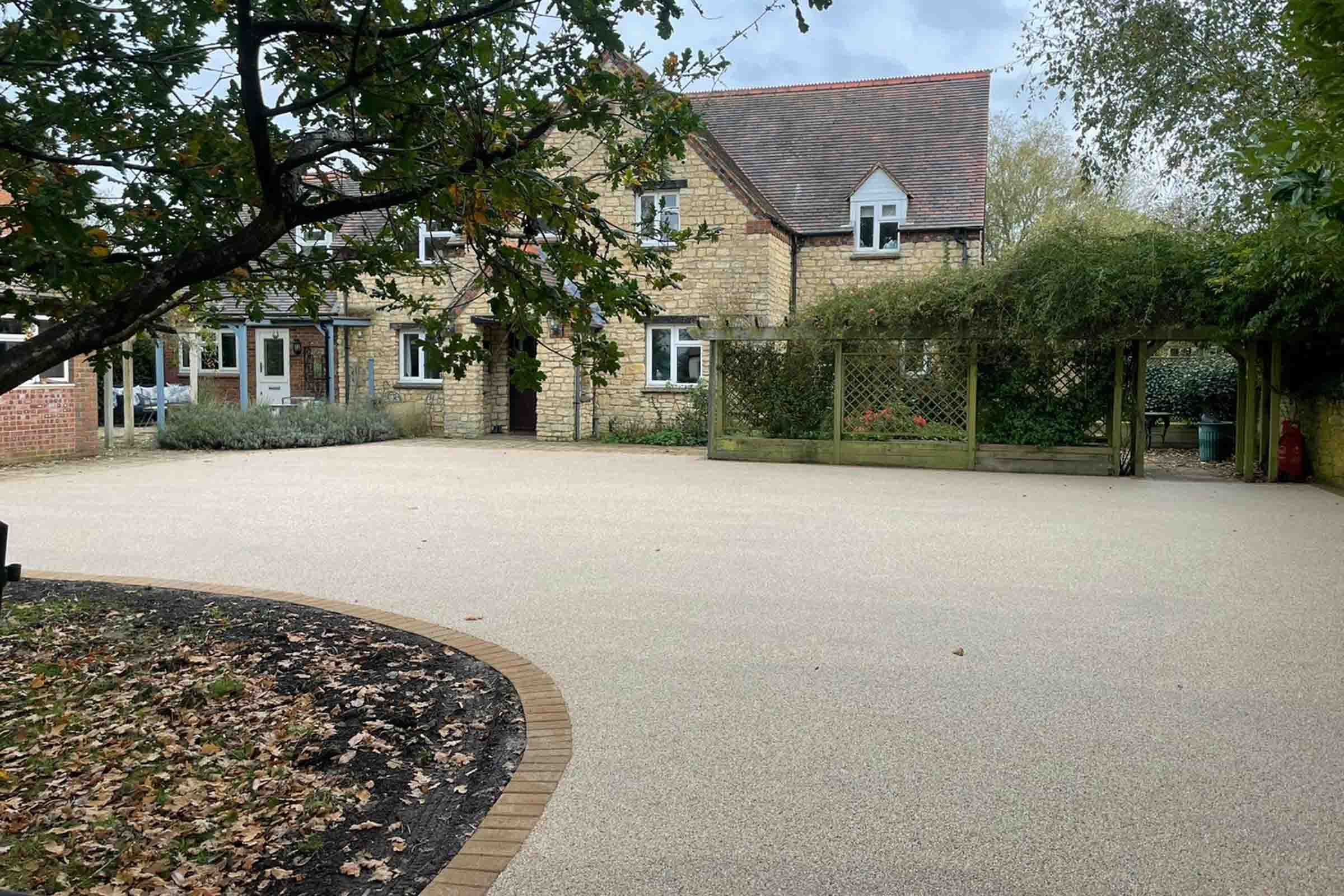
Are resin driveways good?
If you want an attractive, durable and relatively low-maintenance driveway, resin bound driveways are well worth considering. Combining natural aggregates with a specialist resin creates a smooth, seamless finish that complements both traditional and contemporary properties.
Unlike loose gravel, the stones are bound together to create a stable surface. With a choice of colours, textures and decorative borders, you can design a driveway that suits your home while benefiting from a permeable finish where the correct system and base are used.
Liberty Driveways installs resin bound surfaces across Northamptonshire and surrounding areas. Here, we look at the main advantages, potential drawbacks and what to consider before choosing a new driveway.
What are the advantages of resin bound driveways?
- Permeability: A suitably constructed surface allows rainwater to drain through, helping to manage surface water.
- Attractive appearance: Choose from a wide range of natural aggregate colours and blends.
- Low maintenance: Regular sweeping and occasional washing help keep the surface clean.
- Stable finish: Bound aggregate stays in place, unlike loose gravel.
- Versatile design: Contrasting colours and borders can create a bespoke finish.
- Multiple applications: The same type of surfacing can be used for paths, patios, steps and pool surrounds.
Performance depends on suitable materials, a stable base, correct drainage and professional installation.
Permeability and SuDS
One of the main attractions of resin bound surfacing is its permeability. Small voids between the bound aggregates allow rainwater to pass through the surface, potentially reducing puddling and surface runoff.
A permeable driveway can contribute to SuDS, which are designed to manage rainfall and surface water more sustainably. However, the entire construction must be suitable for drainage; a permeable surface alone cannot solve problems caused by an unsuitable base or underlying ground.
What needs to be considered?
- Ground conditions: Establish whether water can drain into the ground effectively.
- Sub-base: Use a suitable construction for both drainage and vehicle loading.
- Levels: Ensure water is managed appropriately around the property.
- Site requirements: Check whether planning or drainage restrictions apply.
Resin driveway colours and design ideas
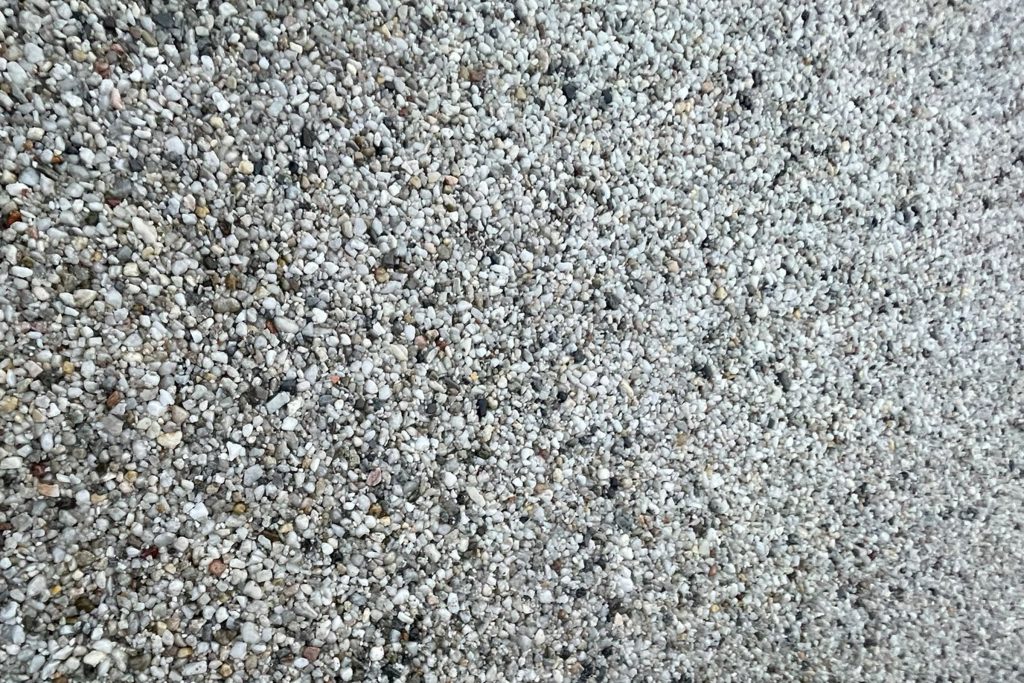
Resin bound surfacing offers plenty of scope for personalisation. Natural aggregates are available in different shades and textures, allowing you to complement your brickwork, render, garden and existing paving.
Popular colours and combinations
- Grey aggregates: A contemporary choice for modern properties.
- Golden and buff blends: Warm tones that complement traditional brickwork and natural stone.
- Brown and earth tones: A natural-looking finish that works well with established gardens.
- Mixed aggregates: A blend of colours adds depth and visual interest.
- Contrasting borders: Darker edging or a complementary entrance section can define the driveway.
You can also combine colours to distinguish parking areas from pathways or create a design that continues into the garden. Before making a decision, view resin bound driveway designs and finishes and check aggregate samples in different lighting conditions.
How is a resin bound driveway installed?
A successful installation starts with the right foundation. The existing surface must be assessed to determine whether it can be retained or whether repairs, excavation or a new base are required.
1. Survey and preparation
- Assess the existing driveway, ground conditions and drainage.
- Check levels, access and the intended vehicle loading.
- Identify damaged areas and determine whether groundwork is necessary.
2. Base construction
Any required excavation, repairs or sub-base installation is completed before the surface is laid. The base must be stable, properly prepared and suitable for the selected resin system.
3. Mixing and laying
The correct quantities of resin and aggregate are thoroughly mixed before being spread across the prepared base. Installers trowel the material to achieve an even depth, consistent finish and neat edges.
4. Curing and inspection
The new surface must be protected while the resin cures. The time required before foot or vehicle traffic can return depends on the product, temperature and site conditions. The manufacturer’s instructions should always be followed.
What equipment is needed?
Professional resin bound driveway installation requires suitable equipment to prepare the base, mix the materials and achieve a consistent finish.
- Forced-action mixer: Ensures the resin and aggregate are thoroughly combined.
- Measuring equipment: Helps maintain accurate material proportions.
- Trowels and finishing tools: Used to spread and finish the surface evenly.
- Ground preparation equipment: May include excavation machinery, compactors and surface preparation tools.
- Levelling tools: Help establish correct levels and neat transitions.
- Protective equipment: Helps installers handle materials and carry out groundwork safely.
Correct equipment is important, but experience, material selection and preparation are equally essential.
Are resin driveways worth it?
Resin bound driveways can be an excellent choice if you want a decorative, seamless surface with a wide choice of colours and relatively straightforward maintenance. A correctly designed permeable system can also help manage rainwater.
The key is to get the preparation, base construction and installation right. If you are considering a new driveway, contact Liberty Driveways to discuss your requirements and arrange a quotation.
Visit Liberty Driveways to find out more about our services and the options available for your property.
Resin bound surfacing offers plenty of scope for personalisation. Natural aggregates are available in different shades and textures, allowing you to complement your brickwork, render, garden and existing paving
Are resin bound driveways durable?
A properly installed resin bound driveway can provide a durable surface for everyday use. Its lifespan and performance depend on the quality of the installation and the conditions it needs to withstand.
- Base stability: Movement or settlement can cause cracking and damage.
- Traffic: The construction must suit the weight and frequency of vehicles using it.
- Materials: The resin and aggregate must be compatible and suitable for external use.
- Installation: Correct mixing, application and curing are essential.
- Maintenance: Regular cleaning helps prevent moss, weeds and debris from accumulating.
Resin bound surfacing is not indestructible. Poor preparation, unsuitable materials and excessive loads can affect its performance, while repairs may be difficult to match exactly to the original finish.
How do you maintain a resin bound driveway?
Resin bound driveways are relatively easy to maintain, although they are not maintenance-free. A simple cleaning routine helps preserve their appearance.
- Sweep away leaves, grit and loose debris regularly.
- Wash the surface when necessary using suitable cleaning methods.
- Remove moss and weeds before they become established.
- Clean up oil and other spills with products approved for the installed system.
- Avoid aggressive cleaning methods or chemicals unless recommended by the manufacturer.
What are the disadvantages of resin driveways?
Although resin bound surfacing has several benefits, it is not the right solution for every property.
- Initial cost: Professional installation can involve a substantial upfront investment, particularly where groundwork is required.
- Preparation: An unsuitable or damaged base may need extensive repairs or replacement.
- Weather: Temperature and moisture can affect installation and curing.
- Repairs: Damaged areas can be repaired, but matching the original colour and texture perfectly may be difficult.
- Drainage: Permeability depends on the complete construction and underlying ground conditions.
Ask your installer to explain the proposed base, drainage arrangements, materials and preparation work before comparing quotations.
Where else can resin bound surfacing be used?
Resin bound surfacing is suitable for more than driveways. Depending on the selected system and site conditions, it can provide a consistent decorative finish across several outdoor areas.
Resin bound pathways
Create a neat route between the driveway, front door and garden with our resin bound pathways.
Resin bound swimming pool surrounds
Complement your outdoor space with a decorative surface designed for the demands of a poolside environment. Explore our resin bound pool surrounds.
Resin bound steps
Coordinate steps with your driveway or pathway for a consistent appearance. Find out more about our resin bound steps.
Resin bound patios
Carry your chosen aggregate finish into the garden with our resin bound patios.
Choosing resin bound driveway contractors
The quality of the installation is just as important as the materials. Before appointing a contractor, ask:
- Is the existing base suitable, or will new groundwork be required?
- How will the surface and drainage be prepared?
- Which resin and aggregate system will be installed?
- What is included in the quotation?
- How long will installation and curing take?
- What maintenance and warranty provisions apply?
Look for resin bound driveway contractors who assess your property individually and clearly explain the proposed construction rather than focusing on price alone.
Resin bound driveway contractors across Northamptonshire
Liberty Driveways installs resin bound driveways across Northamptonshire and surrounding areas. We work in Northampton, Wellingborough, Kettering and Rushden.
Our wider service area includes Corby, Oundle, Bedford, Milton Keynes, Huntingdon, Leicester and Peterborough.